

 US
US GB
GB AU
AU NZ
NZ
In 2025, healthcare crossed a long-anticipated threshold. After nearly a decade of pilots, proofs of concept, and vendor demos, AI systems finally took root in routine clinical and operational practice. As one HLTH 2025 speaker put it, the sector shifted “from concept to infrastructure,” with organisations pursuing measurable productivity gains rather than speculative future benefits (Revelation Partners 2025).
Across the UK, Canada and the United States, ambient AI scribes, workflow automation, and risk prediction tools saw their first serious deployments. Together, these implementations painted a clear picture: AI delivers real value when supported by strong governance, rigorous evaluation, and thoughtful workflow integration.
The rise of ambient AI scribing: healthcare’s first “killer app”
Ambient scribing tools, AI systems that listen to clinician-patient conversations and draft medical notes, became the standout success of 2025.
Real-world impact in Canada
Across Canada, the Jenkins AI Scribe demonstrated large-scale performance:
- 6,700 emergency department sessions
- 58 physicians across 10 sites
- 1,000+ hours of processed audio
- Used in up to 85% of encounters in early adopter groups
Early outcomes included reduced administrative burden, better patient flow, and strong clinician engagement (Amii 2025). Alberta has since committed to deploying the tool to more than 850 ER providers across the province.
Consistent time savings across the US
In the US, AI scribes reduced documentation workloads across specialities:
- 28% reduction in documentation time among high-use clinicians
- 22% decrease in daily documentation time for dermatologists
- Significant drops in after-hours EHR work
In an evaluation of 3,442 physicians, users reported improved patient connection and substantial time savings (Kanaparthy et al. 2025). Patients echoed this, noticing more eye contact and reduced screen time during consultations.
At HLTH 2025, ambient scribing was described as healthcare’s “first killer app” (Revelation Partners 2025). Some deployments even saw an 80% reduction in note-taking time, with clinicians delaying retirement because their work had become enjoyable again.
National endorsement and guidelines
England’s national review concluded that ambient AI scribes can improve data quality, reduce errors, increase face-to-face time, and deliver cost savings through shorter appointments and lower admin burden (NHS England 2025a).
Complementary technical guidelines outlined safe deployment requirements, including integration, risk logs, safety cases, and data governance (NHS England 2025b).
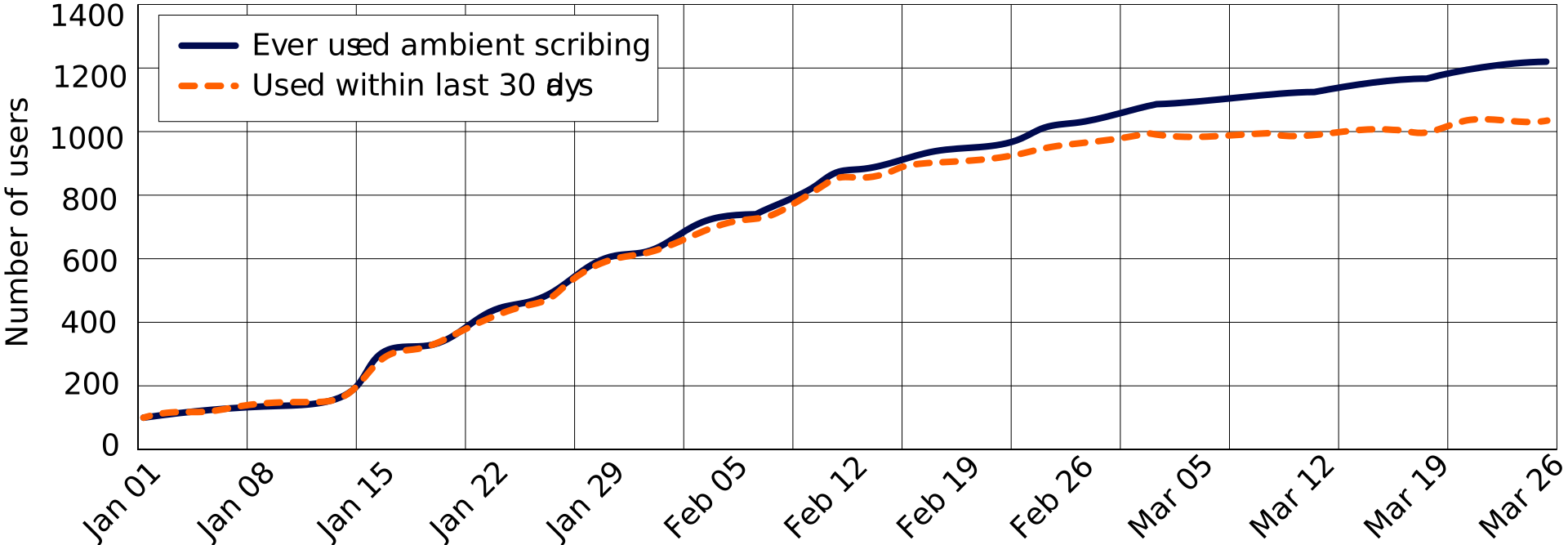
This chart illustrates how rapidly ambient scribing adoption accelerates once a health system transitions beyond pilots and into an enterprise-level rollout.
Operational AI: the “boring but high ROI” wins
While ambient scribing captured headlines, the most consistent financial benefits came from back-office automation.
Coding and billing
A major US health system automated coding for over 200,000 inpatient encounters, utilising generative AI to accelerate throughput and enhance accuracy.
Operating theatre optimisation
AI-driven scheduling analytics improved operating room utilisation by 7%, increasing capacity without additional staffing.
Claims management
One payer–provider network achieved a 23% reduction in denials through automated review.
Across hospitals, leaders repeatedly described these functions as “the boring but high ROI side of AI,” delivering measurable savings within months, not years.
Clinical AI: fewer deployments, high impact
Some clinical AI systems also delivered compelling results in real-world settings.
Sepsis detection
At the Cleveland Clinic:
- 46% increase in true sepsis identification
- 90% decrease in false positives
- Alerts 6–7 hours earlier than standard practice
Oncology toxicity detection
LLM-based models achieved a sensitivity and specificity of 90% or higher in detecting immune-related toxicities, outperforming ICD-based systems.
Clinical AI did not scale as rapidly as operational or scribing tools, but where deployed, it drove meaningful patient-centred outcomes.
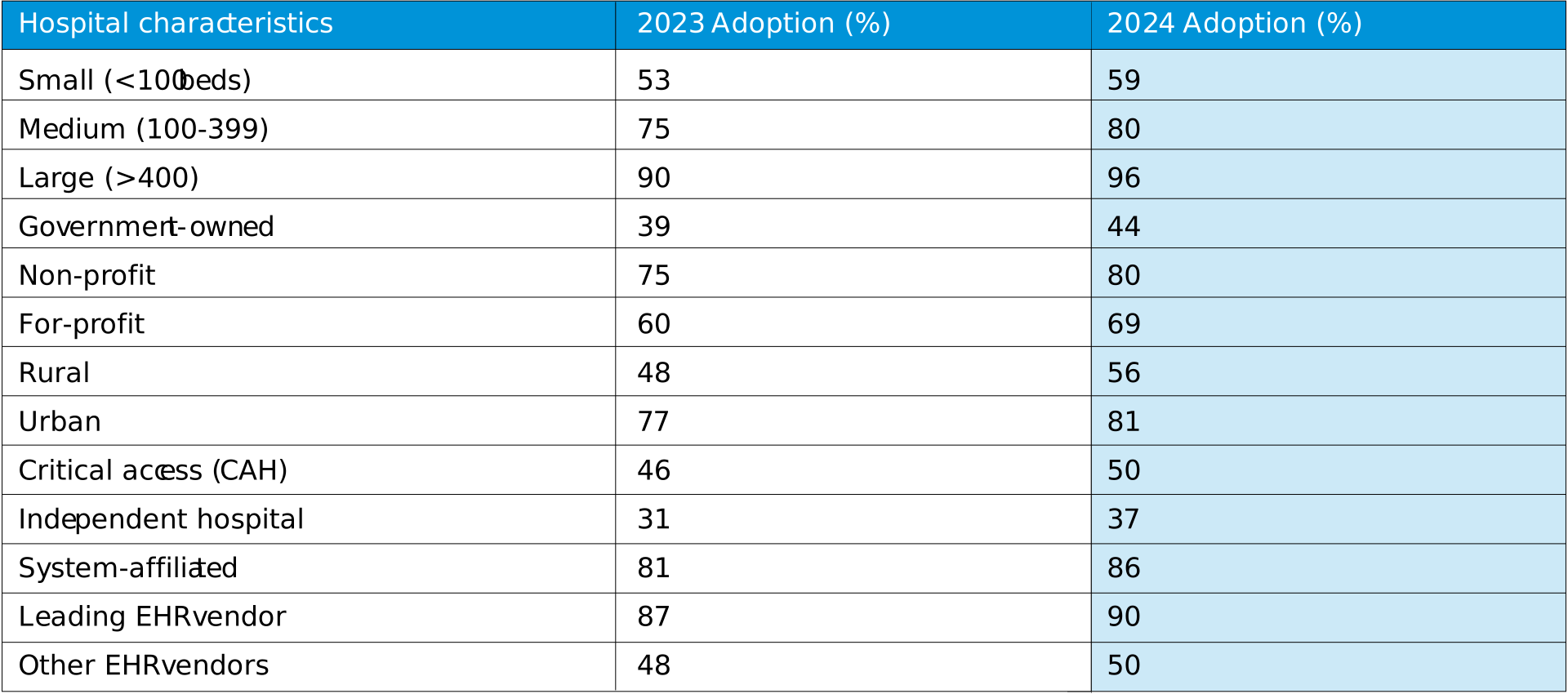
Intuition Labs – https://intuitionlabs.ai/pdfs/ai-in-hospitals-2025-adoption-trends-statistics.pdf
This graph illustrates a persistent digital divide: Large urban hospitals with more substantial IT budgets, data science teams, and shared infrastructure adopt predictive AI at much higher rates than small rural or independent hospitals.
The emerging GenAI divide
Not all AI tools made it to production. In fact, many didn’t.

Source: Forbes https://www.forbes.com/sites/jasonsnyder/2025/08/26/mit-finds-95-of-genai-pilots-fail-because-companies-avoid-friction/
Despite intense interest, 95% of GenAI pilots failed to progress to full deployment. The drop-off reveals deep challenges around integration, workflow readiness, user trust, and organisational capacity.
The Friction Behind AI Adoption: Why Technology Isn’t the Only Problem
Even with strong time savings, real-world evaluations uncovered recurring issues:
- Hallucinated content, such as misidentifying family members.
- Longer notes with minimal added clinical value.
- Up to 50% of clinicians report no time savings from documentation.
- Variable performance across specialities and users.
NHS guidance also warned that generative AI can unintentionally introduce new functions beyond its intended use, raising regulatory and safety concerns (NHS England 2025b).
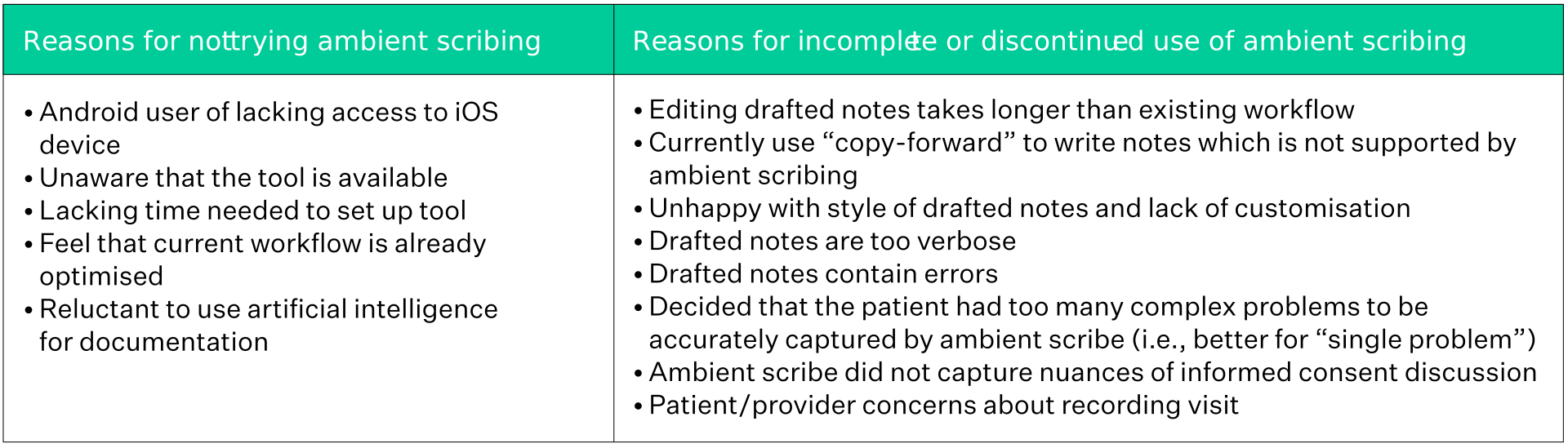
Reasons included variable accuracy, workflow mismatches, unclear ROI, inadequate clinician training, and inconsistent integration across sites.
ROI challenges and executive hesitation
Despite clinician enthusiasm, many US pilots found:
- No clear revenue uplift
- Limited impact on billing
- No proven cost savings from AI scribes
This created friction with CFOs. In HFMA’s 2025 survey, financial leaders rated their readiness to lead AI deployment at just 2.82 out of 5, citing uncertain return profiles and unclear ongoing costs (Williams 2025).
Workflow, integration, and data quality: the slowest part of AI transformation
NHS real-world evaluations highlighted several persistent challenges:
- Wide variability between site IT systems
- Pilots lacking powered evaluation
- Limited frontline uptake
- Tools deployed before pathways were ready
- Vendor-led selection without consistent evidence thresholds
The 2024–25 NHS national framework concluded the organisation had been selecting AI “with enthusiasm but little consistency” (NHS England 2024; Health Innovation Network 2025), emphasising the need for structured, transparent evaluation before scaling technologies system-wide.
Governance and Regulation: The Risk Gets Harder as Models Mature
Canada’s 2025 machine-learning medical device guidance identified several high-risk areas requiring deep oversight:
- Automation bias
- Data drift
- Subgroup performance disparities
- Overfitting and underfitting
- Lack of transparency in model behaviour
- Risks introduced by Predetermined Change Control Plans (PCCPs) for self-updating models
As AI matures, safety assurance is becoming more, not less, complex (Health Canada 2025).
2025: the year AI became real, and the year the system’s weaknesses became visible
2025 marked the moment healthcare began using AI at scale, not just testing it. Ambient AI scribes improved clinician experience, operational AI boosted efficiency, and clinical AI delivered meaningful outcomes.
But the year also exposed the fragility of deployments lacking governance, evidence, and human-centred design.
The next phase is clear: AI’s future success depends not on better models, but on better leadership, evaluation, integration, and assurance. The technology has advanced. Now the system must catch up.
Authored by Tom Varghese, Global Product Marketing & Growth Manager at Orion Health.
References
- Alberta Machine Intelligence Institute (Amii). 2025. AI Scribe Cuts Admin Burden, Boosts Efficiency & Patient Care in Emergency Departments. Published May 21, 2025.
- IntuitionLabs. 2025. AI in Hospitals: 2025 Adoption Trends & Statistics. IntuitionLabs.ai, October 17, 2025.
- Kanaparthy, Naga Sasidhar, Yenny Villuendas-Rey, Tolulope Bakare, Zihan Diao, Mark Iscoe, Andrew Loza, Donald Wright, Conrad Safranek, Isaac V. Faustino, Alexandria Brackett, Edward R. Melnick, and R. Andrew Taylor. 2025. “Real-World Evidence Synthesis of Digital Scribes Using Ambient Listening and Generative Artificial Intelligence for Clinician Documentation Workflows: Rapid Review.” JMIR AI 4 (1): e76743
- Revelation Partners. 2025. Five Takeaways on the State of AI in Healthcare from HLTH 2025. Revelation Partners, October 29, 2025.
- Williams, Jeni. 2025. “The Healthcare C-Suite of the Future: From AI to ROI Emerging Needs Drive Demand for New Skillsets.” Healthcare Financial Management Association (HFMA), November 6, 2025.
- NHS England. 2025a. AI-Enabled Ambient Scribing Products in Health and Care Settings: An Overview for NHS Executives and Boards. Published April 27, 2025.
- NHS England. 2025b. Guidance on the Use of AI-Enabled Ambient Scribing Products in Health and Care Settings. Published April 29, 2025.
- NHS England. 2024. Planning and Implementing Real-World Artificial Intelligence (AI) Evaluations: Lessons from the AI in Health and Care Award. Published October 16, 2024.
- Health Innovation Network (London). 2025. NHS TEST: Not Every AI Is Intelligent, but We Need an Intelligent Framework to Choose New Technologies. Published 2025.
- Health Canada. 2025. Pre-Market Guidance for Machine Learning-Enabled Medical Devices. Published February 5, 2025. Government of Canada.