


 US
US GB
GB AU
AU NZ
NZBy Ian Binks, Business Development Director
The ambition for digital transformation across the NHS is significant. A Single Patient Record. Neighbourhood health services that work across traditional organisational boundaries. Better use of the NHS App. AI supporting clinicians and helping to tackle some of the pressures facing the workforce.
There is plenty to be optimistic about. But setting out the destination is one thing. Getting there is another.
Between that ambition and making it work in practice are some familiar problems that have undermined digital programmes before. There are bear traps on the path to the NHS’s digital future, and many of them aren’t really technology problems.
This is particularly relevant as plans for the Single Patient Record take shape. Delivering the Single Patient Record: From vision to reality, a Public Policy Projects report produced in partnership with Orion Health, makes the case for treating the SPR as a clinical transformation programme, not simply a national technology project.
It’s a principle that applies well beyond the SPR.
When everyone’s responsible, who is accountable?
Interoperability is a good example. Responsibility for making information flow is distributed across EPR suppliers, shared care record providers, ICBs, national bodies and others.
Everyone has a part to play, but that can make it difficult to answer a simple question: who owns the outcome?
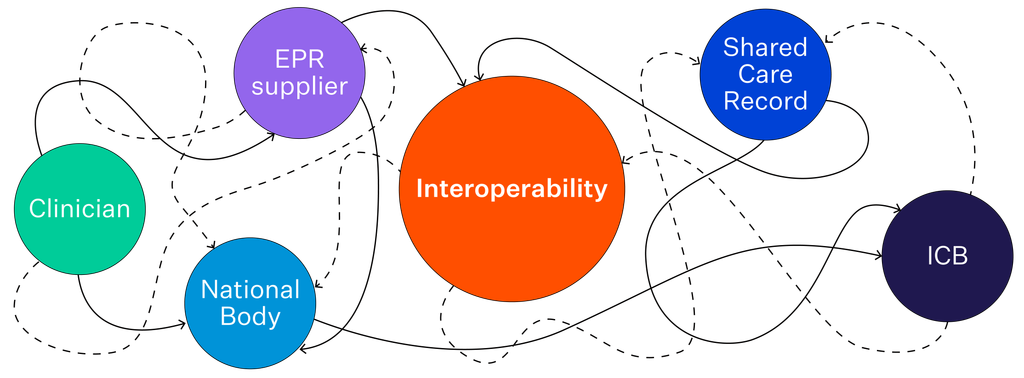
It’s possible for individual organisations to fulfil their responsibilities while a clinician somewhere else still can’t access the information they need. At that point, interoperability stops being an IT problem and becomes a clinical one.
This becomes even more important as neighbourhood health brings different organisations and professionals together around an individual, where we need a more rounded approach to care following a Biopsychosocial model. Information needs to move with them, but so does accountability.
These questions need to be designed into national programmes from the outset, rather than assuming somebody else will resolve them further down the line.
From paper records to digital filing cabinets
Recent reporting suggests the NHS is still spending almost £240 million a year storing paper medical records. It’s a striking reminder of the work still to be done.
But simply replacing physical filing cabinets with digital ones isn’t the answer either.
Shared care records have transformed access to information across many parts of the NHS, bringing together information that once sat within individual organisations and systems. Yet as medical records grow, clinicians can find themselves faced with years of letters, results, diagnoses, medications, observations and notes.
Making all of that available is an achievement but making it useful is the next challenge.
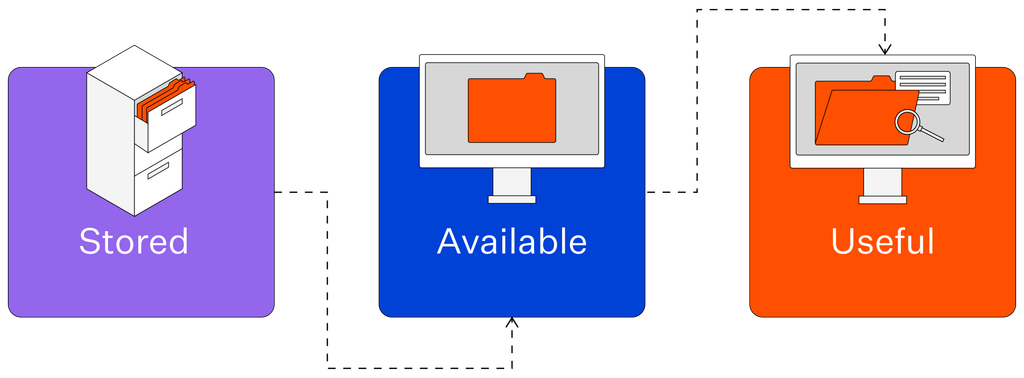
The question needs to move from “can I access the data?” to “can I easily consume the information that’s useful to me, when I need it?”
That’s also reflected in the PPP report, which calls for connected records that integrate into clinical systems and workflows. The aim shouldn’t be another place for clinicians to look. It should be getting the right information into the context of care.
What happens when the pilot succeeds?
The NHS is not short of innovation. New technologies are piloted across services, organisations and localities all the time.
The problem often comes when they work.
Too often, the business case answers “should we try this?”, without properly answering “what happens if it succeeds?”
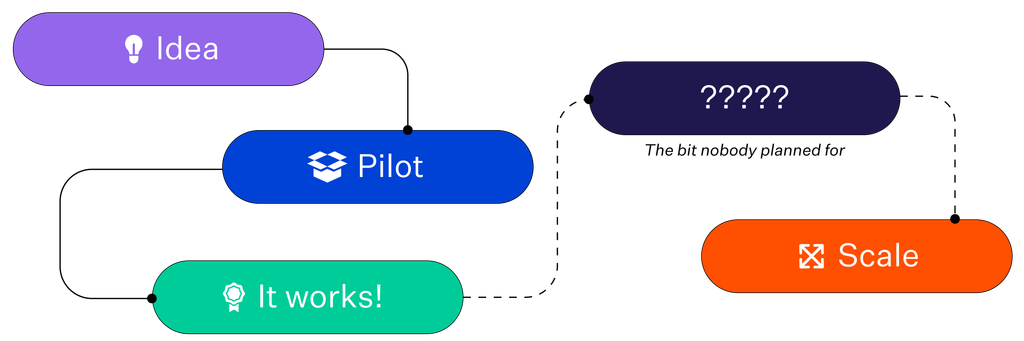
Taking something from one service or locality to an ICB or region is a very different proposition. Funding, governance, operating models and change management all look different at scale.
Pilots should therefore be designed with success in mind. Who would fund the next stage? Who would own it? What would need to change operationally?
Planning for success doesn’t mean committing to scale before the evidence exists. It means making sure there is somewhere to go when the evidence arrives.
Don’t just digitise the process
There’s a temptation in digital transformation to take an existing way of working, put technology around it and assume the result will be better.
Sometimes it will be. Sometimes all we’ve done is make an inefficient process digital.
Programmes such as the SPR and neighbourhood health give us an opportunity to ask more fundamental questions. What outcome are we trying to achieve? Why does the process work this way today? Which steps are actually necessary? What could be removed entirely?
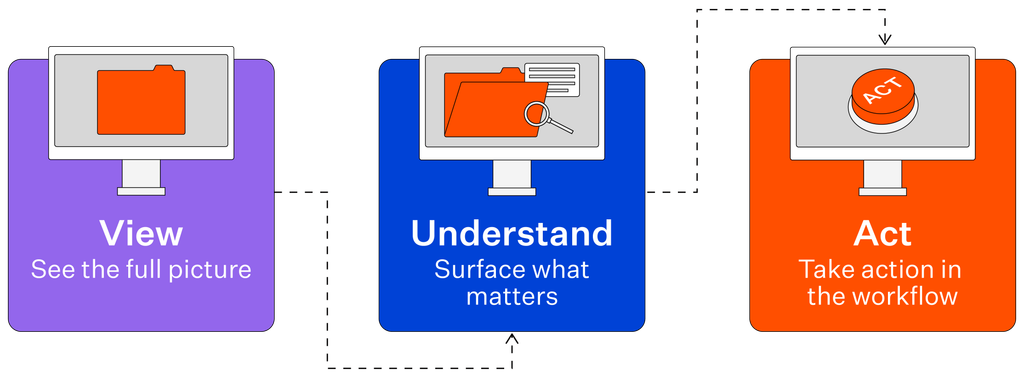
Digital transformation works best when change, process redesign and digitisation happen together.
Otherwise, we risk investing heavily in preserving ways of working that were designed around the limitations of the systems we’re trying to replace.
AI needs trust as well as ambition
AI has enormous potential in healthcare, from reducing administrative burden to helping clinicians make sense of increasingly complex patient information.
As adoption accelerates, however, knowing that those tools can be trusted becomes increasingly important.
Healthcare organisations need to understand the pedigree behind an AI solution. What evidence supports it? Has it been clinically validated? Has it been tested in real healthcare settings and with representative populations? Is there transparency around its limitations and governance?

These questions aren’t barriers to innovation. They’re what allow good AI to be adopted with confidence.
The reputation or size of a supplier isn’t enough on its own. What matters is the evidence behind the specific technology and its intended use.
As the NHS moves towards wider adoption, the question needs to evolve from “where can we use AI?” to “where can we use AI that we know works, can be trusted and will improve care?”
Avoiding the bear traps
The NHS should be ambitious about what comes next. There is also a strong foundation to build from, with shared care records and years of interoperability work already changing what is possible across health and care systems.
But technology alone won’t deliver the future being described.
Accountability, governance, usability, workflow, planning for scale and redesigning how care works all matter. As the Public Policy Projects report argues in relation to the SPR, success should ultimately be judged by whether it enables safer, faster and better coordinated care.
The bear traps aren’t unexpected. We’ve encountered most of them before.
The opportunity now is to recognise them early enough to avoid falling into them again.