


 US
US GB
GB AU
AU NZ
NZ
In healthcare, services are taking the place of software. The industry still offers tools and features, but value is shifting to those who take responsibility for results, not just those who enable activity.
For years, vendors have delivered systems to support tasks such as documentation, scheduling, and analytics, while providers carried the burden of turning those tools into clinical or financial outcomes.
That model is now under pressure from three forces: financial constraint, workforce fragility, and AI that can execute work, not just assist it.
Why healthcare is shifting from tools to outcomes.
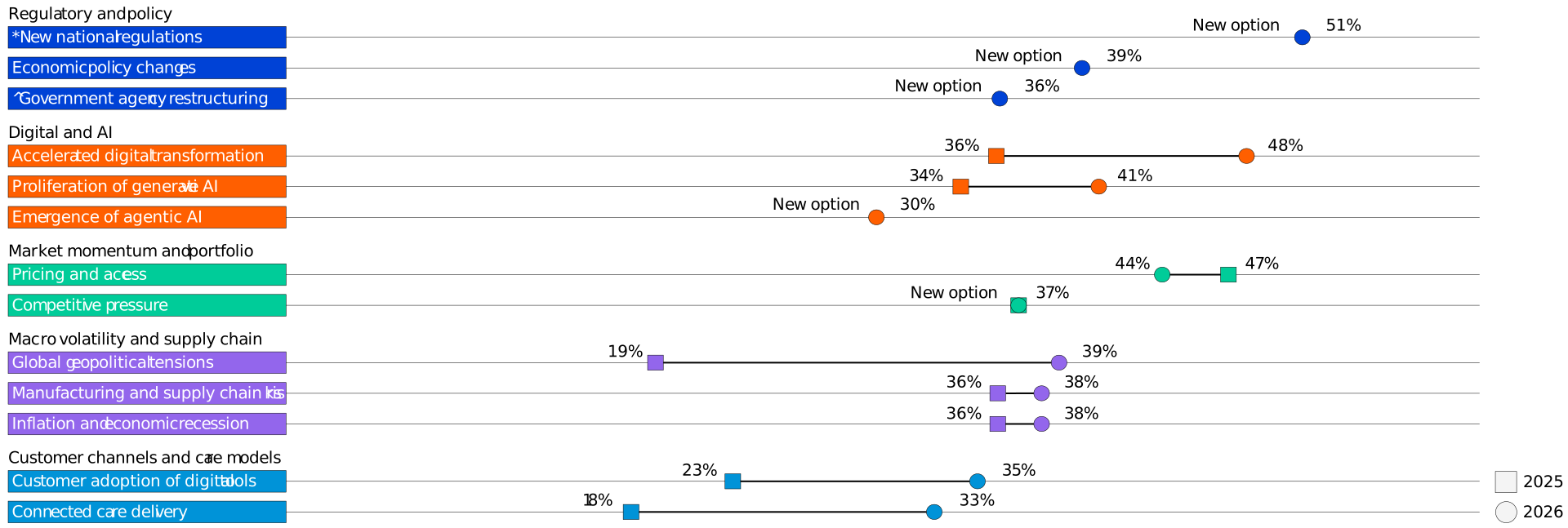
Health system leaders are prioritising cost control and care model transformation, with AI enabling more standardised workflows and scalable digital services.
Technology is no longer the product; it is an input into services that must demonstrate economic and clinical value.
Source: Deloitte
Regulation, AI, and global pressures are accelerating this shift toward outcome-based models.
Execution is the constraint, not technology.
Despite investment, many organisations remain stuck in execution paralysis, where fragmented processes and misalignment prevent AI from delivering measurable value.
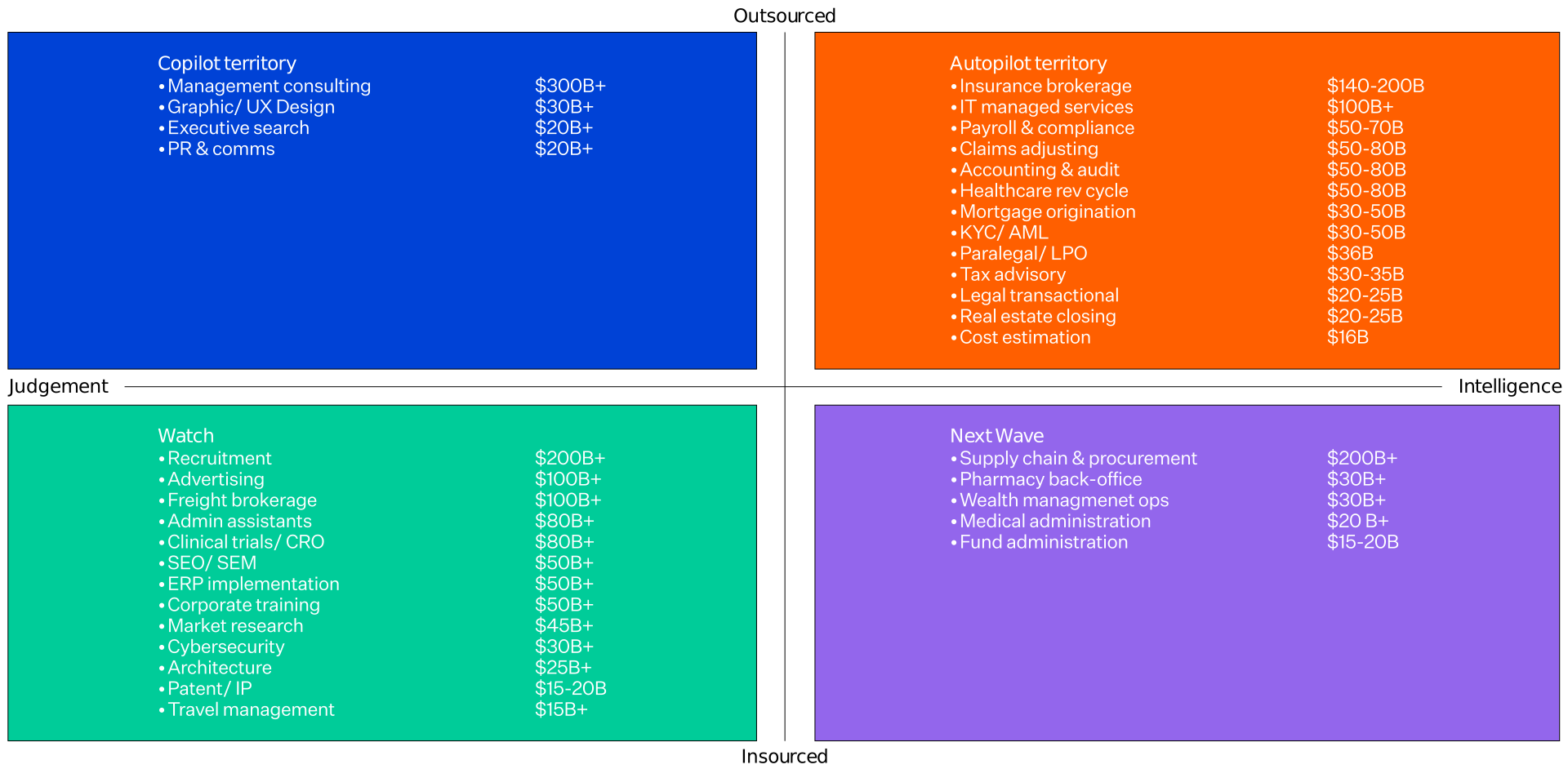
The advantage now lies with organisations that can operationalise intelligence into repeatable, outcome-producing workflows. As intelligence becomes abundant, tools commoditise, and value shifts to those delivering the work.
Source: Sequoia Capital
Routine, rules-based work, especially already outsourced functions, is most exposed to AI-driven execution.
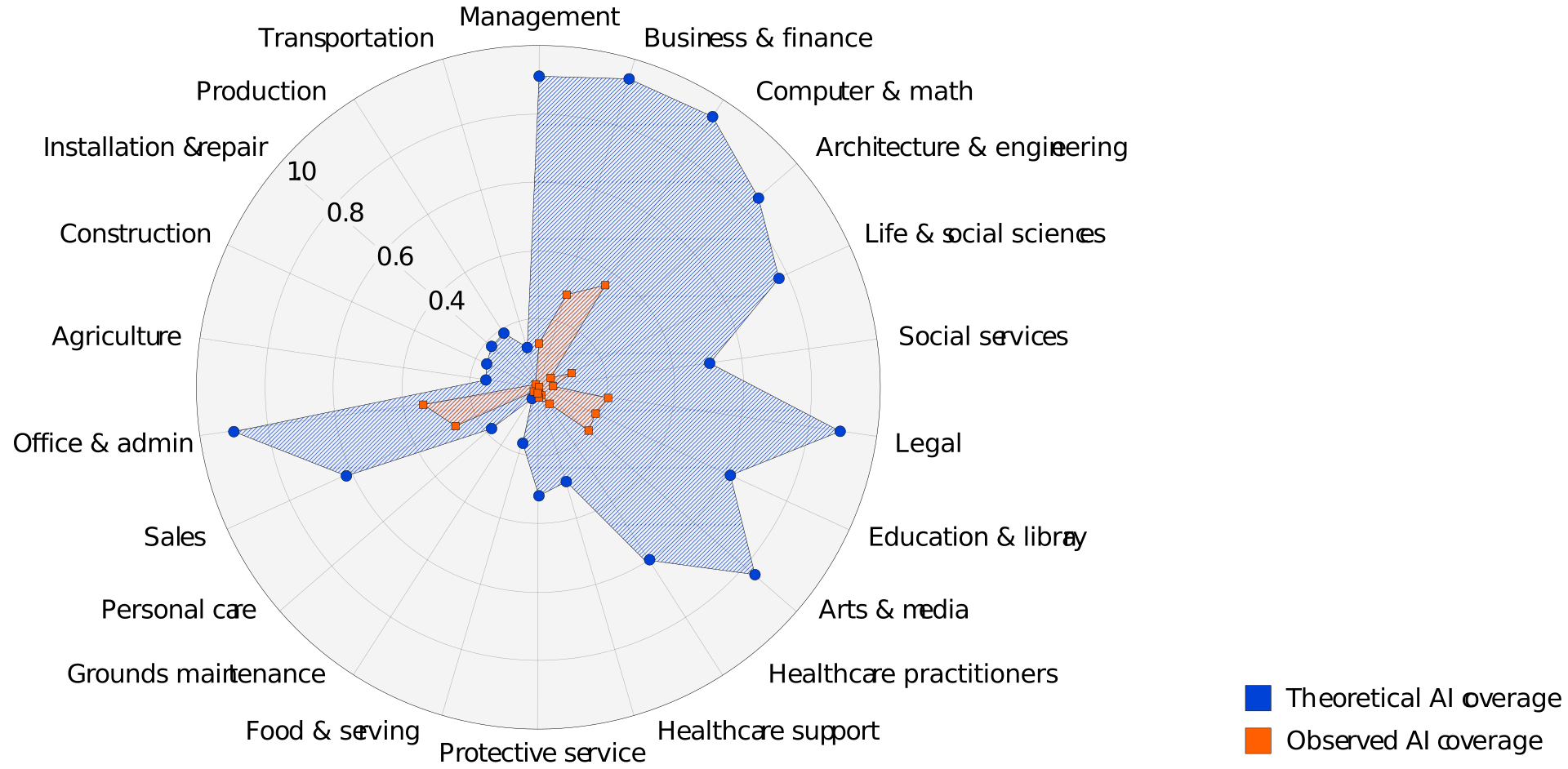
AI is automating administrative work at scale.
The earliest impact is in administrative domains.
Medical coding and claims processing are rules-based, outcome-measured tasks, making them highly suited to AI-driven automation.
Source: Anthropic
The gap between what AI can do and what it is already doing is rapidly narrowing, particularly in structured workflows.
This is not just efficiency. It is the substitution of manual work with automated, outcome-based services.
From reactive care to proactive, AI-driven models.
AI is also reshaping care delivery.
Predictive analytics, remote monitoring, and AI-driven follow-up are enabling a shift from reactive treatment to proactive, preventative care.
Value is moving from activity to measurable improvements in health outcomes, aligning with value-based care and whole health models.
From tools to orchestrated value streams.
Healthcare organisations must now orchestrate value streams.
AI needs to be embedded across clinical and administrative workflows, not layered on top.
Leading organisations are:
- linking AI to core value streams like diagnostics and patient flow,
- scaling beyond pilots,
- building integrated, end-to-end workflows.
At the same time, architectures are evolving toward modular, connected systems where multiple AI capabilities are coordinated across workflows.
In this model, the system that controls orchestration controls value.
The rise of outcome-based AI business models.
The economics of healthcare AI are shifting.
A new generation of companies combines service delivery with software economics, achieving software-like margins while delivering human-level outcomes. They are not selling licences. They are selling results.
This shifts the competitive dynamic:
- value accrues to those who own outcomes,
- data compounds advantage,
- AI improves through execution.
Over time, more of the value chain becomes automated.
What this means for healthcare leaders.
This is a strategic inflection point.
Organisations that deploy tools without owning outcomes risk disintermediation, while those that control both data and outcomes will capture disproportionate value.
This requires a shift:
- from product deployment to service orchestration,
- from features to measurable impact,
- from technology spend to value-based investment.
As AI embeds into care and decision-making, governance becomes critical, not just for compliance, but as a driver of trust and value.
Outcomes are becoming the only currency in healthcare.
The industry is still early in this transition. Adoption remains uneven, and many organisations have yet to scale or realise full value.
But the direction is clear.
Those who act early will design for outcomes, embed AI into workflows, and build feedback loops that continuously improve performance. Others will compete in an increasingly commoditised layer of the stack.
This shift is structural.
In healthcare, services are becoming the new software, because outcomes are becoming the only currency that matters.
Authored by Tom Varghese, Global Product Marketing & Growth Manager at Orion Health.
References
- Bek, J. (2026, March 5). Services: The new software. Sequoia Capital.
- Bessemer Venture Partners. (2026, January 22). State of health AI 2026.
- Boston Consulting Group & BCG X. (2025, December). How AI agents and tech will transform health care in 2026.
- Deloitte Center for Health Solutions. (2025, December 11). 2026 global health care outlook.
- Deloitte Center for Health Solutions. (2025, December 9). 2026 life sciences outlook.
- Guidehouse. (2026). Healthcare AI trends report.
- KPMG International. (2025). Intelligent healthcare: A blueprint for creating value through AI-driven transformation.
- Krishna, A., Friend, D., Gohad, N., & Reddy, P. (2025, November). The coming evolution of healthcare AI toward a modular architecture. McKinsey & Company.
- Massenkoff, M., & McCrory, P. (2026, March 5). Labor market impacts of AI: A new measure and early evidence.