


 US
US GB
GB AU
AU NZ
NZDigital health is often positioned as a way to make healthcare more accessible, responsive, and convenient. In many cases, that promise is real. A virtual consultation can save hours of travel, while remote monitoring can help people manage their health between appointments.
But an important question remains: who is digital health actually designed for?
Many digital health tools still appear to assume a fairly specific type of user: someone with a reliable device, stable internet access, confidence navigating apps and portals, and sufficient health literacy to understand the system’s requests. They also assume that a person’s symptoms, risks, and circumstances are well represented in the evidence and data used to design the pathway.
That is a narrower group than we often acknowledge.
Availability is not the same as accessibility.
This matters because digital health is increasingly becoming the front door to healthcare.
As appointments move online, triage becomes digital, and patient communication shifts into portals and apps, the design of these tools influences who can access care easily and who faces additional barriers.
A patient portal is not truly accessible if someone cannot navigate it. A video consultation is not convenient if a person lacks reliable connectivity, privacy, or confidence using the platform. Likewise, an app is not empowering if it assumes a level of digital health literacy that many users lack.
The challenge is not whether digital services are available. It is whether people can meaningfully use them.
Women’s health shows how gaps can be carried forward.
Women’s health provides a clear example of how existing inequities can follow healthcare into digital environments.
Evidence consistently shows that women live longer than men but spend more of their lives in poorer health. They also experience delayed diagnoses, unmet care needs, and poorer healthcare experiences across several areas. These disparities are linked to longstanding gaps in research, funding, and clinical understanding.
Digital health does not automatically solve these issues. In some cases, it risks reinforcing them.
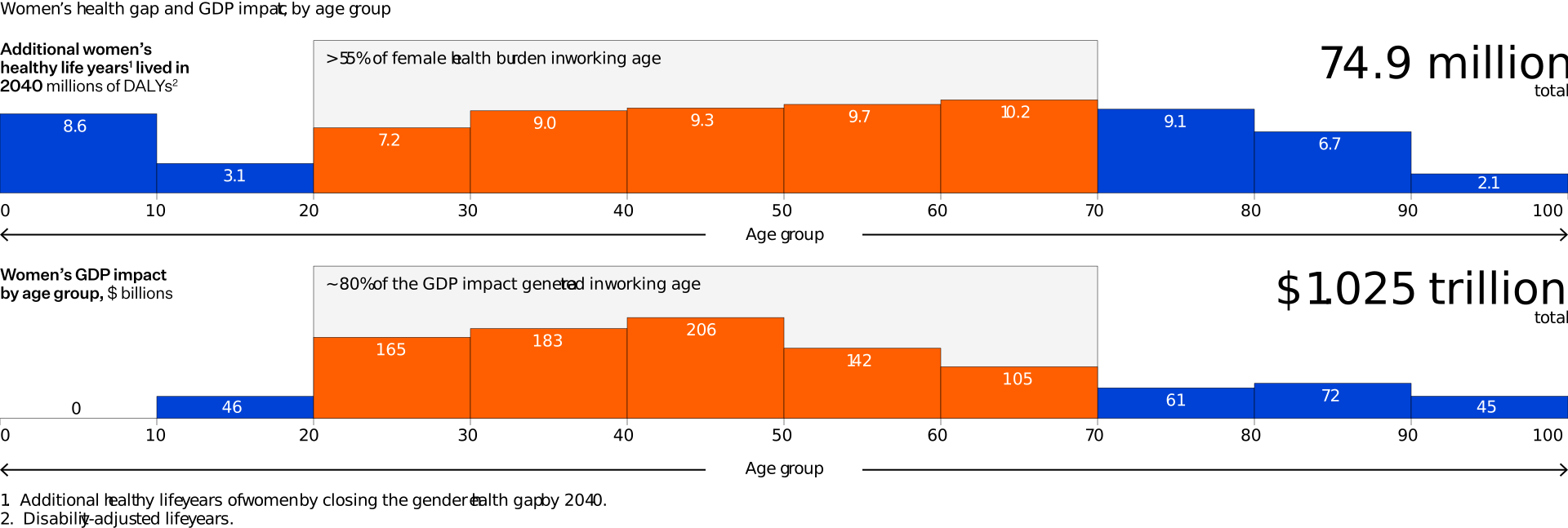
Source: McKinsey Health Institute
McKinsey estimates that more than half of the women’s health gap occurs during working years, accounting for approximately 80% of the associated economic impact. The implications extend far beyond healthcare alone.
Technology can amplify existing biases.
If women’s symptoms are poorly represented in clinical datasets, digital tools may struggle to identify or respond appropriately to them. If certain conditions have historically been under-researched, digital pathways can replicate those gaps through automated workflows and algorithms.
AI makes this challenge even more significant.
AI systems depend on the quality and representativeness of the data used to train them. A model developed using data from one population, health system, or geography may not perform equally well elsewhere. The question is not simply whether a tool works. It is whether it works for the people most likely to be overlooked.
Scale is not the same as equity.
One of the most common assumptions in digital health is that scaling technology automatically improves access. In reality, scale can amplify existing advantages and disadvantages.
If a solution works best for confident, connected, health-literate users, expanding it may simply improve experiences for those already well served. People facing language barriers, limited digital confidence, disability, poor connectivity, or complex health needs can remain excluded.
The issue is not scale itself. It is what gets scaled.
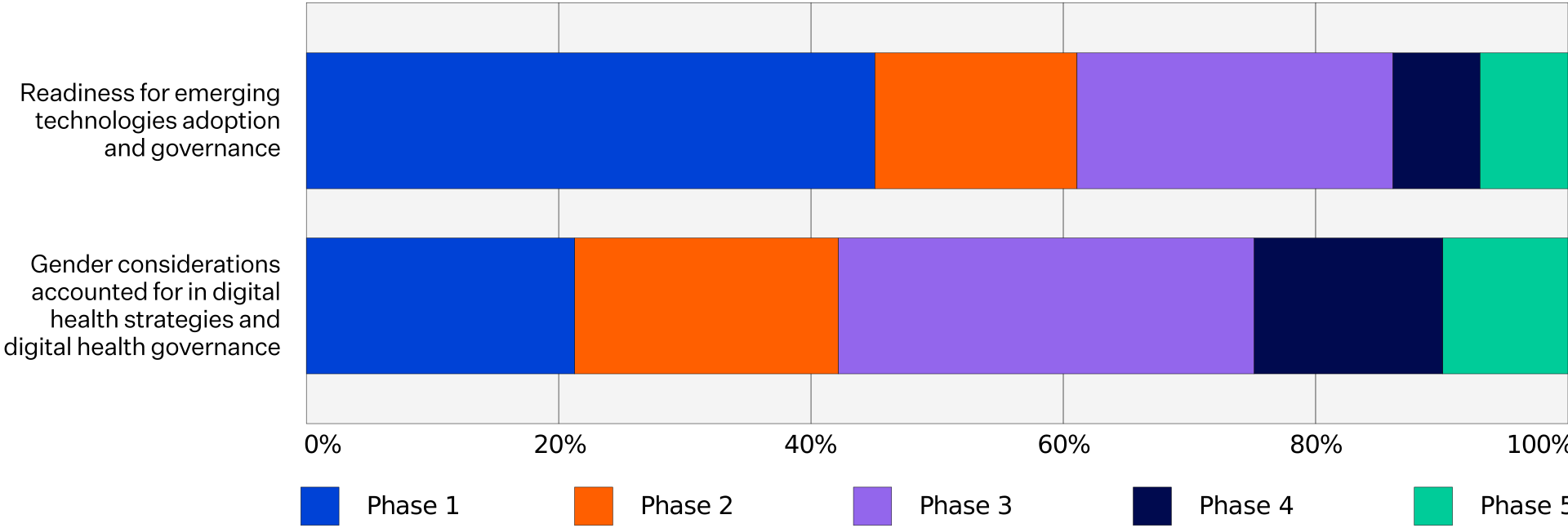
Source: State of Digital Health 2024 Brief
Despite growing global digital health maturity, many countries remain unprepared for AI, while equity and gender considerations are still inconsistently embedded in digital health strategies.
Measuring success differently
For health systems and vendors, this is a strategic issue.
Adoption rates and satisfaction scores are useful, but they only measure the experience of people who engage with a service. They tell us little about those who never become users.
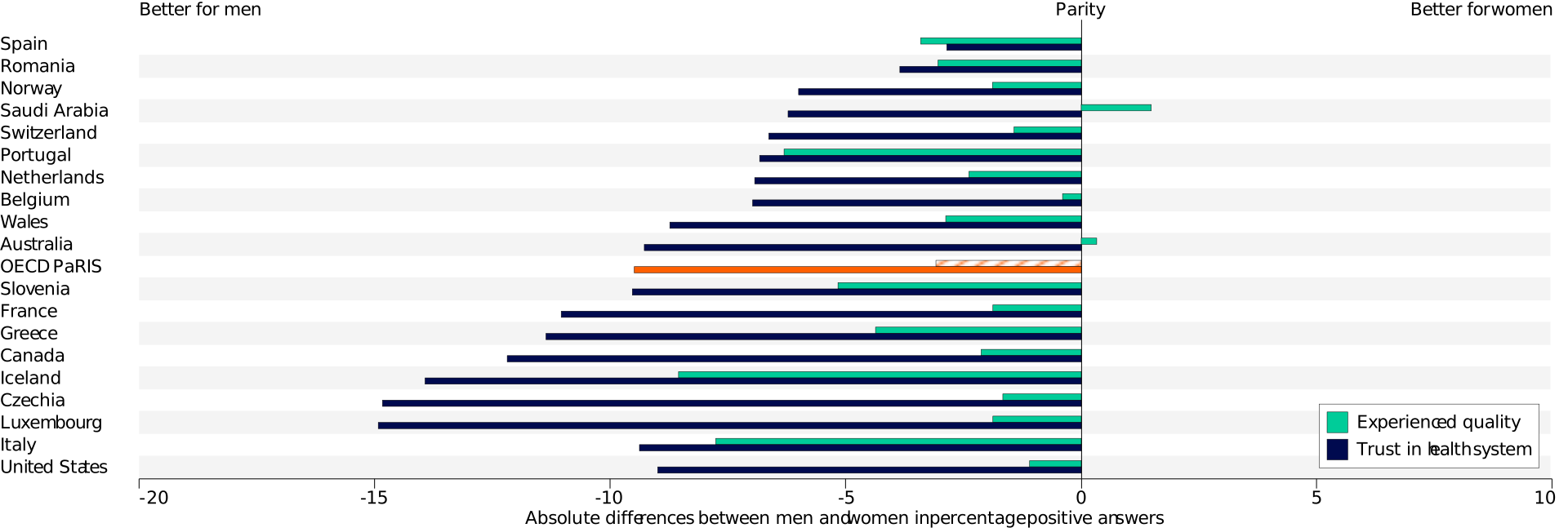
📊 Graph: Gender Differences in Positive Healthcare Experiences
Source: OECD
OECD findings show significant differences in trust and healthcare experiences between men and women across many countries, highlighting the importance of measuring outcomes across population groups rather than relying solely on averages.
A digital solution can appear successful while still failing to reach the people with the greatest need.
A better design question
The next phase of digital health should start with a different question: who is most likely to be excluded?
Answering that requires involving underserved populations earlier in the design process, testing solutions across diverse groups, supporting digital health literacy, and measuring outcomes beyond overall adoption.
Digital health can absolutely improve access. But inclusion is not an automatic outcome of digitisation. It is the result of deliberate choices about evidence, design, governance, and implementation.
As digital health becomes embedded into everyday care, success will not be measured by how many tools we deploy. It will be measured by whether the people with the greatest need actually benefit.
Authored by Tom Varghese, Global Product Marketing & Growth Manager at Orion Health.
References:
- Celi, L. A., Cellini, J., Charpignon, M. L., Dee, E. C., Dernoncourt, F., Eber, R., Mitchell, W. G., Moukheiber, L., Schirmer, J., Situ, J., Paguio, J., Park, J., Gichoya Wawira, J., & Yao, S. (2022). Sources of bias in artificial intelligence that perpetuate healthcare disparities: A global review. PLOS Digital Health, 1(3), e0000022.
- Chidambaram, S., Jain, B., Jain, U., Mwavu, R., Baru, R., Thomas, B., Greaves, F., Jayakumar, S., Jain, P., Rojo, M., Ridao Battaglino, M., Meara, J. G., Sounderajah, V., Celi, L. A., & Darzi, A. (2024). An introduction to digital determinants of health. PLOS Digital Health, 3(1), e0000346.
- Choi, S. K. (2025). Bridging gender health gaps through digital health interventions: Integrating digital health literacy. Women’s Health Nursing, 31(2), 88–93.
- Ellingrud, K., Pérez, L., Petersen, A., & Sartori, V. (2024, January 17). Closing the women’s health gap: A $1 trillion opportunity to improve lives and economies. McKinsey Health Institute.
- Merone, L., Tsey, K., Russell, D., & Nagle, C. (2022). Sex inequalities in medical research: A systematic scoping review of the literature. Women’s Health Reports, 3(1), 49–59.
- OECD. (2025). Gendered differences in health outcomes and healthcare access. In Gender equality in a changing world: Taking stock and moving forward. OECD Publishing.
- Veinot, T. C., Mitchell, H., & Ancker, J. S. (2018). Good intentions are not enough: How informatics interventions can worsen inequality. Journal of the American Medical Informatics Association, 25(8), 1080–1088.