


 US
US CA
CA GB
GB NZ
NZ
The role of the private sector in healthcare is often framed as a simple choice between public and private provision. In reality, that framing misses the point. The real issue is system design, the way incentives are structured, and how outcomes are governed.
When viewed this way, the conversation becomes less ideological and more operational.
Why governments engage the private sector
There are clear, practical reasons governments involve private providers, especially in systems under fiscal or workforce pressure.
Private providers can:
- Expand capacity quickly without major capital investment.
- Reduce waiting lists.
- Introduce operational flexibility.
In New Zealand, outsourcing elective procedures has helped treat more lower-risk patients and reduced pressure on public hospitals. Around the world, private providers often step in where public systems can’t reach or don’t have enough resources.
In these situations, involving private providers isn’t just a choice; it’s often a practical way to address system limitations.
Why healthcare doesn’t behave like a normal market
There’s a lot of uneven information, people usually can’t choose when they need care, and it’s hard to measure results compared to costs. These issues can skew incentives.
Because of this, private providers often focus more on saving money than on quality of care. This can cause:
- Selective intake of lower-risk, more profitable patients,
- Delivery models focused on cost control over long-term outcomes.
This behaviour isn’t accidental; it reflects the system’s design.
The shift in clinical complexity
When public and private sectors work side by side, a clear pattern appears: the complexity of cases shifts.
Private providers tend to deliver high-volume, lower-complexity care, while public systems retain higher-risk, resource-intensive patients.
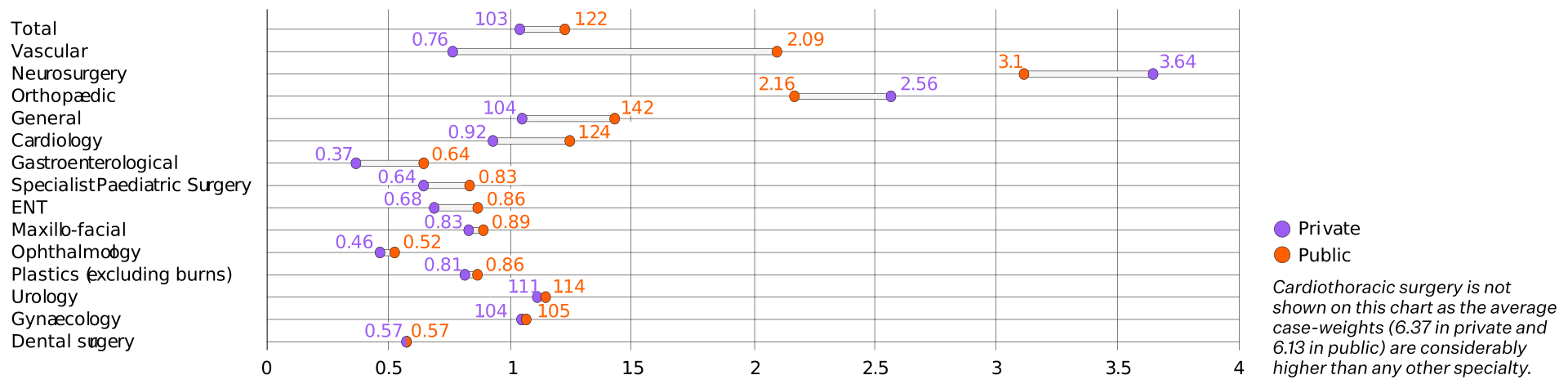
Source: Te Whatu Ora / Health NZ (via RNZ)
This imbalance has structural consequences:
- Public systems become the default provider for complexity and cost.
- Workforce pressure increases as both sectors draw from the same talent pool.
- Training opportunities decline as simpler cases move out of the public system.
Over time, this erodes system capability.
The impact on quality and outcomes
The evidence on quality is mixed, but trending negative.
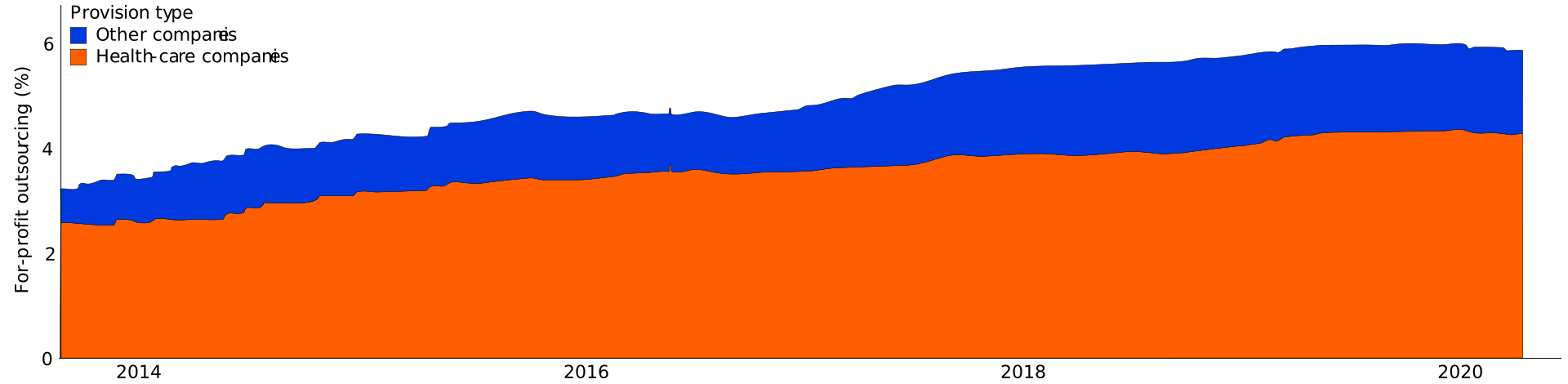
Source: NHS England data
Longitudinal studies show that increased outsourcing is often associated with:
- Reduced staffing ratios
- In some cases, worse health outcomes
There is little consistent evidence that privatisation improves care quality. Some studies even link higher levels of outsourcing with more avoidable deaths.
At best, the impact is uncertain. At worst, it is detrimental.
Governance and system control challenges
Privatisation also introduces complexity at a system level.
Outsourcing can:
- Reduce accountability,
- Limit visibility into cost and performance,
- Fragment decision-making.
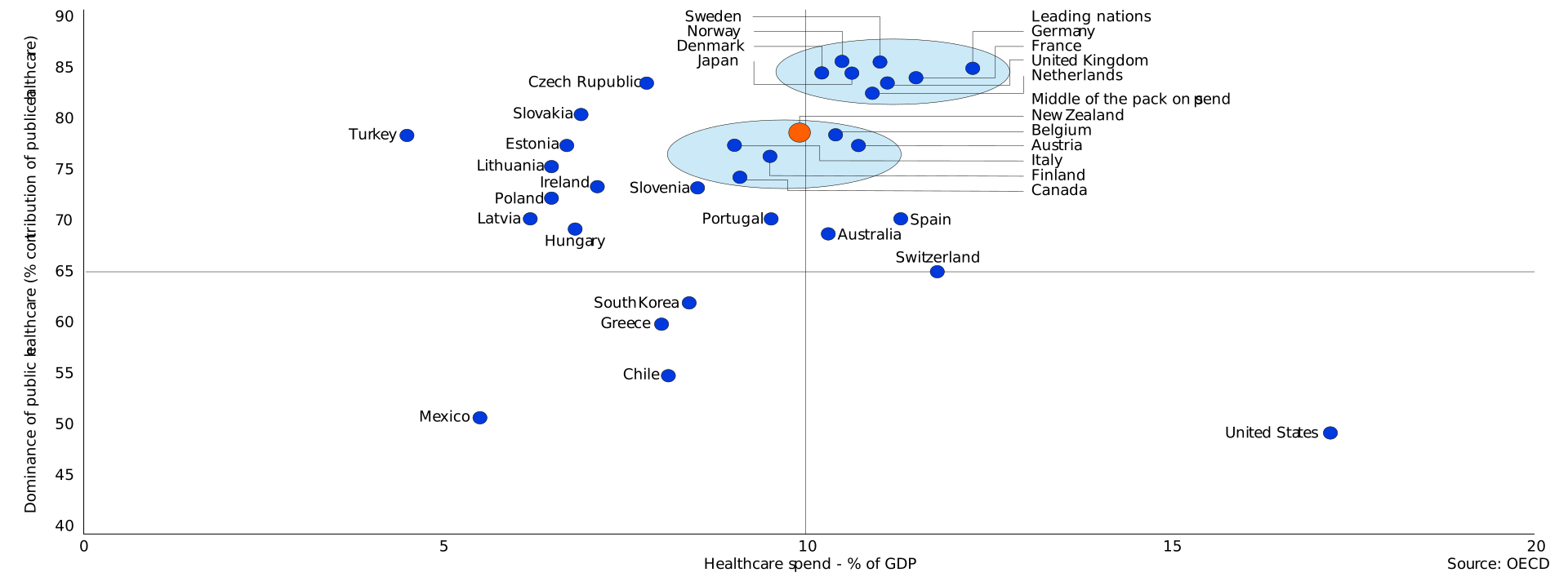
Source: The Health Foundation
These problems make it harder for the system to use resources well and adapt when needs change.
The equity trade-off
The most significant impact is on equity.
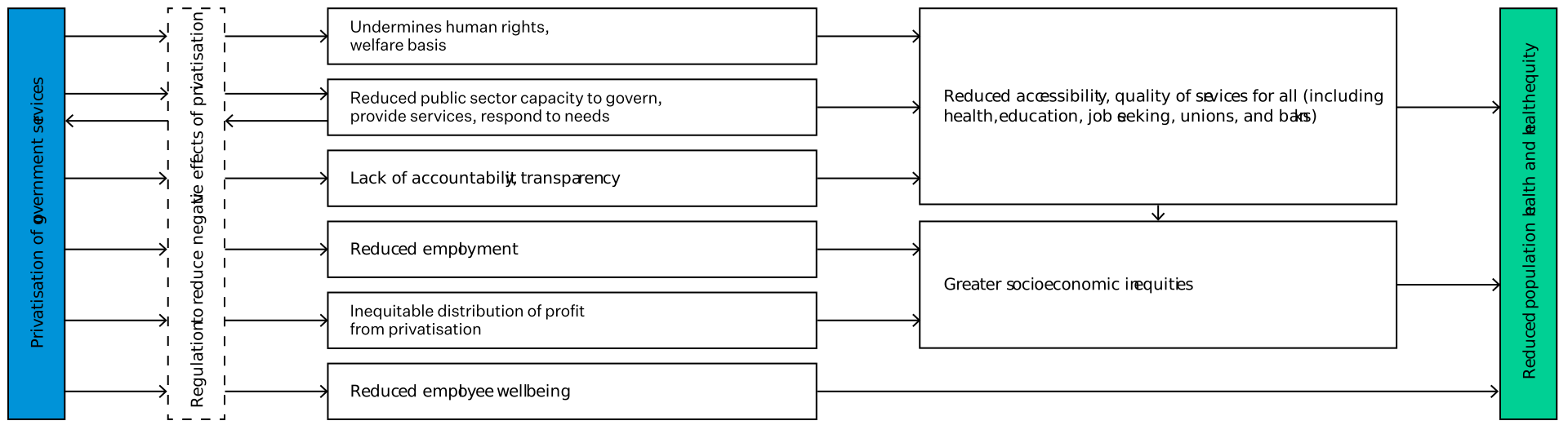
Source: Anaf et al. (2024)
Evidence consistently shows that privatisation can:
- Increase inequities in access and outcomes.
- Benefit lower-risk, higher-income populations.
- Underserve vulnerable groups.
In New Zealand, there are concerns that outsourcing may primarily benefit already advantaged populations, potentially widening inequities, particularly for Māori and rural communities.
If the system isn’t carefully planned, it just shifts benefits around instead of making things better overall.
Designing a system that works
The question isn’t whether the private sector should be involved; it already is.
The real question is: under what conditions does it improve system-level outcomes?
A disciplined approach to system design includes:
Define the role clearly.
Use private providers to absorb overflow demand and deliver standardised care, not to define care pathways or system architecture.
Align incentives to outcomes.
Shift from volume-based models to those that reward quality, continuity, and long-term outcomes.
Protect the public system’s capability.
Ensure the public system remains the anchor for:
- Complex care
- Workforce training
- Clinical capability development
Strengthen Transparency and Governance
Full visibility of cost, performance, and outcomes is essential to effective system management.
A question of design, not ideology
The private sector isn’t automatically a problem. If managed well, it can help the system run more efficiently. If not, it can fragment care and increase inequity.
The evidence doesn’t support wholesale privatisation. It supports disciplined, conditional participation.
For healthcare leaders, the challenge isn’t choosing sides. It’s designing systems where capital allocation and clinical outcomes are aligned.
Take the Next Step
Designing a more connected, equitable health system starts with better data use across organisational boundaries.
See how Orion Health’s Health Information Exchange solutions can help everyone in the system work together, share information, and get better outcomes:
Authored by Tom Varghese, Global Product Marketing & Growth Manager at Orion Health.
References
- Anaf, J., Freeman, T., & Baum, F. (2024). Privatisation of government services in Australia: What is known about health and equity impacts. Globalization and Health, 20(32).
- Baker, G. (2025, November 28). Entrenching outsourcing a hit on other providers and equity. New Zealand Doctor.
- Goodair, B., & Reeves, A. (2024). The effect of health-care privatisation on the quality of care. The Lancet Public Health, 9(3), e199–e206.\
- McInerney, M., Hinchcliff, R., FitzGerald, G., & King, R. (2023). Private equity investment in private for-profit healthcare in Australia and New Zealand: A scoping review. Asia Pacific Journal of Health Management, 18(2), Article i2347.
- Newton, K. (2025, October 9). Outsourcing easy cases to private sector risks two-tier health system, doctors warn. RNZ News.
- Siddiqi, S., Aftab, W., Venkat Raman, A., Soucat, A., & Alwan, A. (2023). The role of the private sector in delivering essential packages of health services: Lessons from country experiences. BMJ Global Health, 8, e010742.