


 US
US CA
CA GB
GB NZ
NZ
Acute care was created for crisis situations like trauma, sudden illness, or rapid decline. Its main strengths are speed and readiness.
But in many health systems, acute services now carry a far heavier and more complex load than they were ever designed for. Emergency departments and hospitals have become the default destination not only for emergencies, but for unmet needs elsewhere in the system.
How acute care became the safety net for the health system
EDs are increasingly seeing cases of chronic disease exacerbations, mental health crises, medication issues, social instability and lack of access to timely primary or community care. This is not because acute care is the best place to manage these needs, but because it is often the only part of the system that is always available.
Research into acute, unscheduled care highlights that demand doesn’t start at the hospital door. Social and individual factors, such as poverty, housing instability, health literacy, ageing populations, and multimorbidity, play a significant role in when and how people seek care.
When community resources are fragmented or difficult to navigate, the ED becomes the safety net by default.
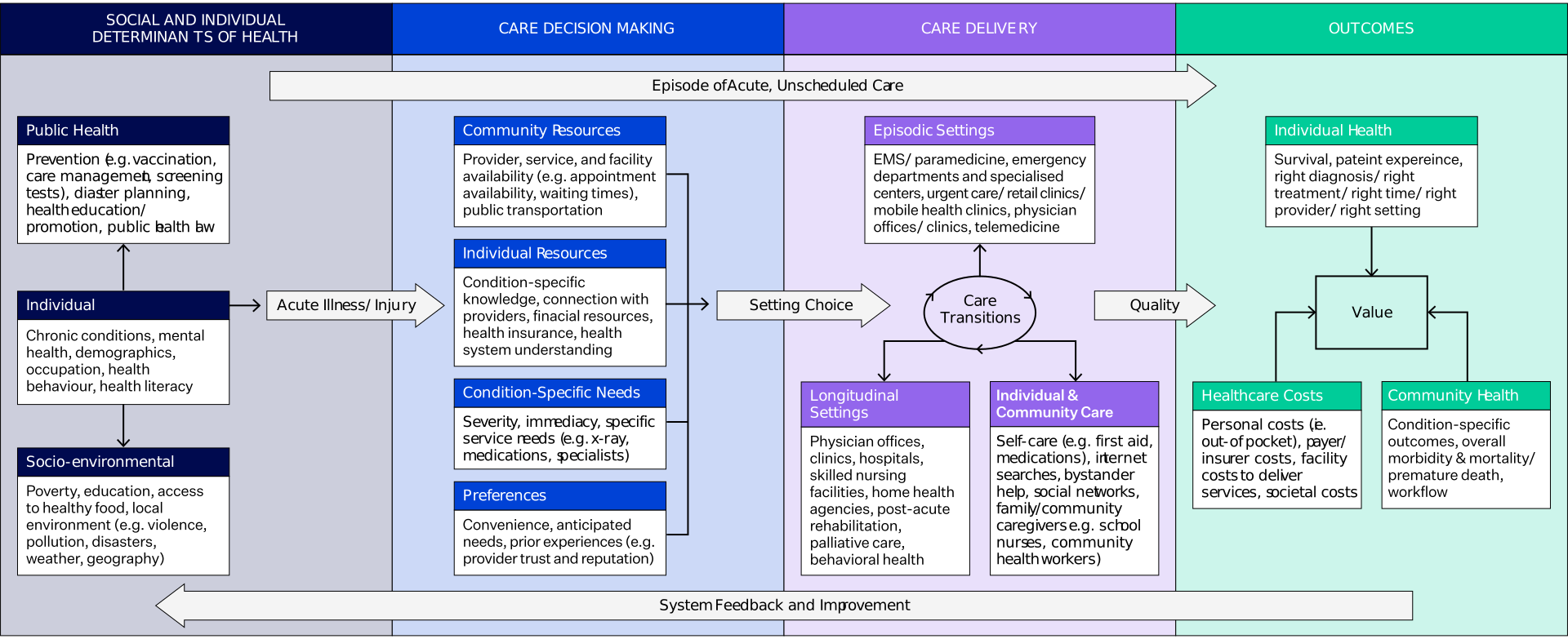
Source: Pines et al., Annals of Emergency Medicine (2016)
The gap between short-term care and ongoing needs
This creates a fundamental mismatch. Acute services are optimised for episodic intervention, yet much of what now flows through them requires continuity.
Patients with chronic conditions often experience repeated acute episodes, not because their condition is unpredictable, but because care is poorly connected across settings. Discharge without effective follow-up, limited information sharing between providers, and weak transitions between hospital and community care all increase the likelihood of return visits. As a result, the acute system ends up managing recurrence rather than resolution.
What international comparisons show about health system design
International comparisons reinforce this pattern. Health systems with stronger primary care access and better service integration tend to see lower emergency department utilisation for lower-acuity needs, alongside more appropriate hospital admissions.
Where access to general practice or community services is constrained, acute activity rises, often without corresponding improvements in outcomes. The result is sustained pressure on capacity, staff burnout, and a poor patient experience as patients navigate a system that treats symptoms rather than causes.
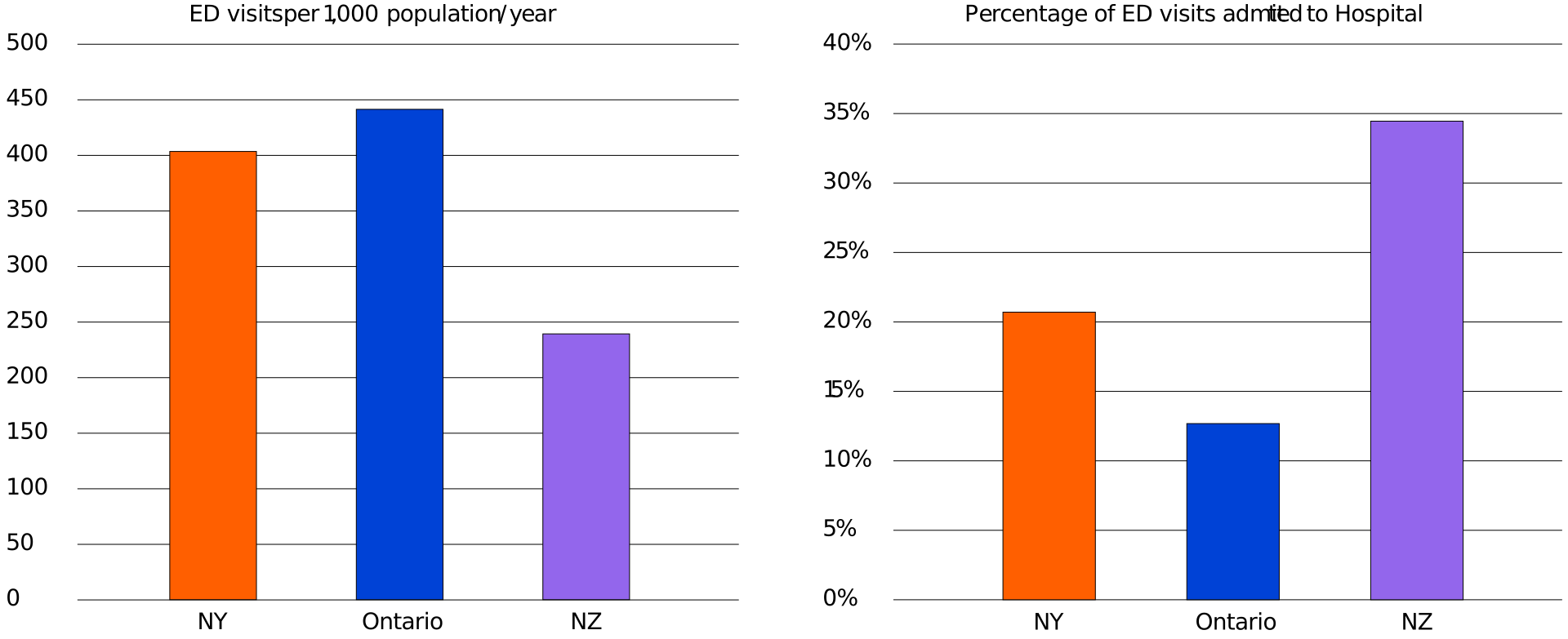
Source: Duffy et al., Academic Emergency Medicine (2023)
Why acute care itself isn’t the problem
The problem isn’t that acute care is failing. In fact, it does its intended job very well.
The real issue is that acute care is being used to make up for gaps in other parts of the system. Over time, this changes both what is needed and how care is delivered. Focusing only on quick discharges or avoiding admissions can make things worse by valuing speed over coordination. Letting patients go quickly without solving their deeper health or social needs just moves the problem forward.
Rebalancing the system instead of stretching acute care further
The evidence clearly shows we need to rebalance the system, not keep stretching acute care.
Integrated care models emphasise teamwork and shared responsibility across different settings. Chronic care models and community coordination try to prevent avoidable acute episodes by meeting needs earlier and more completely. When patients get help managing their conditions over time, acute care can go back to its main job: handling crises.
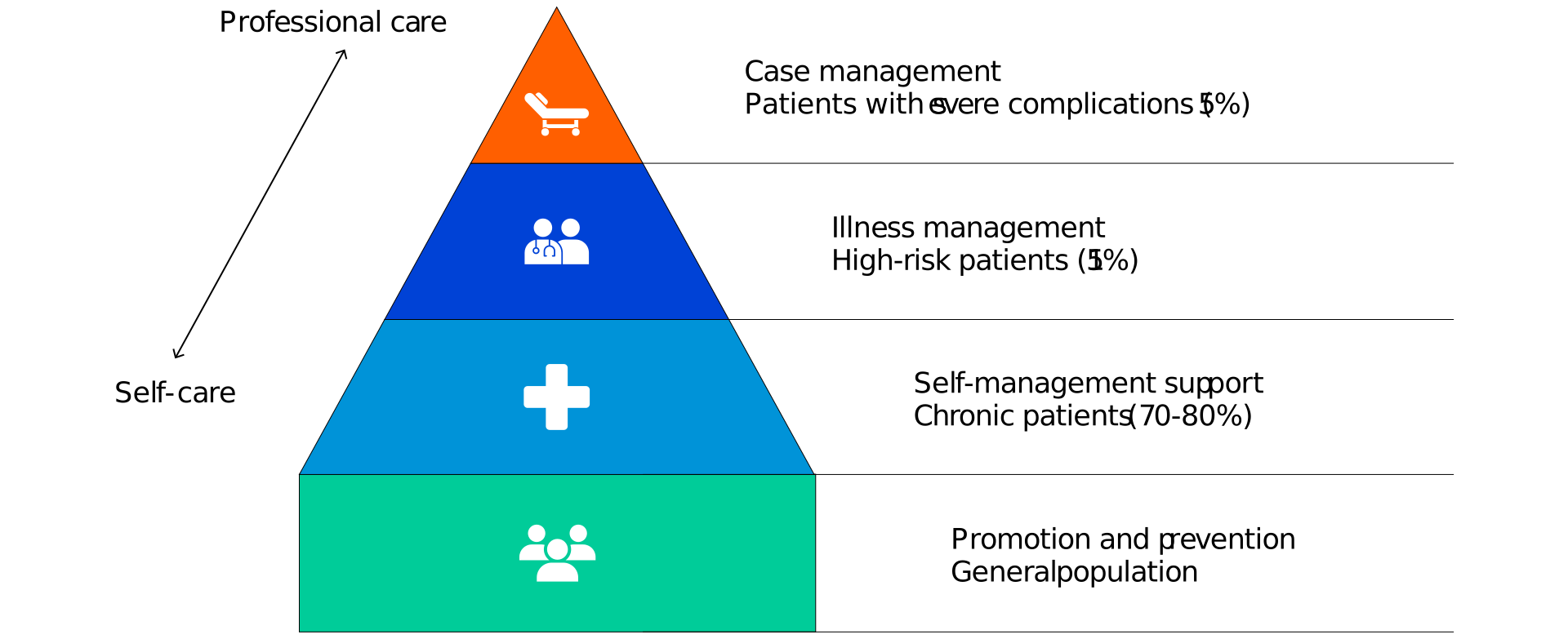
Source: World Health Organisation
Acute care as one part of a larger health system
This doesn’t make acute care less important. In fact, it highlights its value.
By seeing that emergency departments and hospitals are just one part of a bigger system, not the center, health systems can use acute care where it helps most. This means building up primary and community care, improving how information is shared, and making sure transitions treat an acute episode as part of a longer care journey, not just a one-time event.
Acute care will always be essential. But if it keeps carrying the burden of system gaps, it will stay under pressure, and patients will keep coming back when they don’t need to.
The real opportunity lies not in asking acute services to do more, but in enabling the rest of the system to do its part.
Authored by Tom Varghese, Global Product Marketing & Growth Manager at Orion Health.
References
- American College of Emergency Physicians. 2017. The Acute Unscheduled Care Model: Enhancing Appropriate Admissions. Irving, TX: American College of Emergency Physicians.
- Duffy, Juliana, Peter Jones, Candace D. McNaughton, Vicki Ling, John Matelski, Renee Y. Hsia, Bruce Landon, and Peter Cram. 2023. “Emergency Department Utilization, Admissions, and Revisits in the United States, Canada, and New Zealand: A Retrospective Cross Sectional Analysis.” Academic Emergency Medicine 30 (9): 946–954.
- Global Burden of Disease 2019 Acute and Chronic Care Collaborators. 2025. “Characterising Acute and Chronic Care Needs: Insights from the Global Burden of Disease Study 2019.” Nature Communications 16: 4235.
- Philips Healthcare Transformation Services. 2016. Acute Unscheduled Care in Seven Developed Nations: A Cross Country Comparison. Amsterdam: Philips.
- World Health Organization Regional Office for Europe. 2016. Integrated Care Models: An Overview. Copenhagen: WHO Regional Office for Europe.
- World Health Organization Regional Office for Europe. 2016. Integrated Care Models: An Overview. Health Services Delivery Programme. Copenhagen: WHO.