


 US
US CA
CA GB
GB NZ
NZThe biggest constraint on healthcare isn’t funding or technology. It’s clinical capacity.
When there aren’t enough clinicians to meet demand, the consequences extend far beyond waiting lists. Access declines, costs rise, staff burnout increases, and productivity suffers. What begins as a workforce challenge quickly becomes a health system and economic challenge.
That’s why clinician shortages should be treated as a strategic issue at the board level, not simply a recruitment problem. The opportunity is significant. McKinsey Health Institute estimates that closing the global healthcare workforce gap could reduce the global disease burden by 7%, avert 189 million years of life lost to death and disability, and generate $1.1 trillion in economic value.
Why clinician shortages are more than a workforce issue.
Clinical capacity has become a critical constraint on healthcare performance.
Workforce shortages affect access, quality, financial sustainability, and staff wellbeing. Nearly 40% of healthcare organisations report turning patients away due to staffing shortages, underscoring how workforce gaps directly limit access to care.
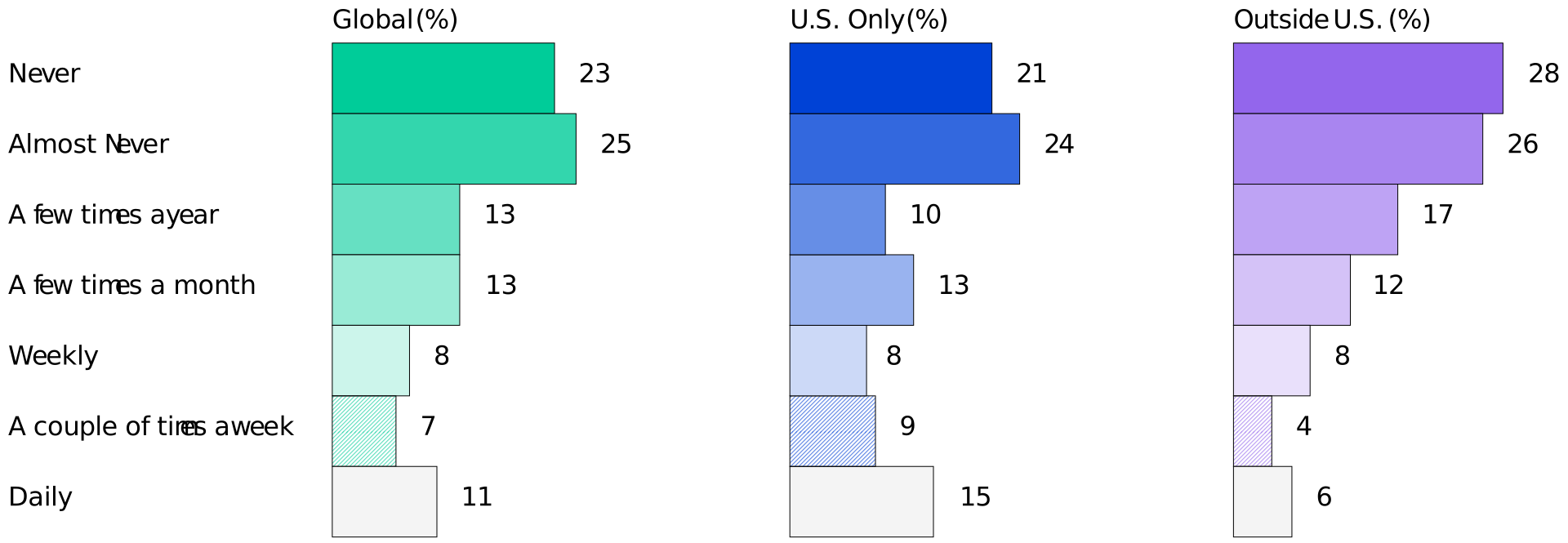
Source: Shanafelt, T., & Kuriakose, C. (2023). NEJM Catalyst Innovations in Care Delivery
While the challenge varies between countries, no health system is immune. Even regions with relatively high clinician-to-population ratios continue to face vacancies, workforce maldistribution, burnout, and growing waiting lists.
Why training more clinicians won’t be enough.
Expanding training pathways remains essential, but it is not a complete solution.
Training new clinicians takes years and depends on funding, supervision, educator availability, placement capacity, and retention. Workforce analyses from The Health Foundation, The King’s Fund, and the Nuffield Trust show how difficult it is to translate investment into additional frontline capacity.
A more strategic question is:
How much of every dollar invested in workforce supply becomes sustainable clinical capacity at the point of care?
Answering that requires organisations to focus not only on recruitment, but also on retention, productivity, workforce experience, and care model design.
Retention Is Capacity Preservation
Recruiting clinicians is expensive. Losing them is often even more costly.
Research consistently shows that clinicians are more likely to stay when they experience supportive leadership, manageable workloads, work-life balance, fair compensation, and the ability to work at the top of their scope.
Burnout remains one of the biggest threats to workforce stability. It contributes to absenteeism, turnover, reduced access, and poorer care quality. At the same time, inadequate staffing increases burnout, creating a cycle that further erodes capacity.
Every clinician who leaves takes valuable expertise, local knowledge, and mentoring capability with them.
Technology should release capacity, not replace clinicians.
Technology has an important role, but not by replacing clinical judgement.
The greatest opportunity lies in reducing low-value work, improving coordination, and freeing up time for patient care. Emerging evidence on ambient AI scribes highlights this potential by reducing documentation burden and improving clinician experience.
The key question for any workforce technology is simple:
- Does it release clinician time?
- Does it improve experience and safety?
- Can it scale without creating new burdens elsewhere?
If the answer is no, it is unlikely to address the workforce challenge.
The growing importance of new care models.
Technology alone cannot close workforce gaps.
Health systems can also expand capacity through multidisciplinary care models that better utilise pharmacists, nurses, allied health professionals, community health workers, mental health practitioners, and care coordinators.
When designed well, these models protect scarce specialist time while bringing care closer to communities.
At the same time, the rapid growth of digital care workforce platforms reflects the growing use of new labour market models to address unmet demand.
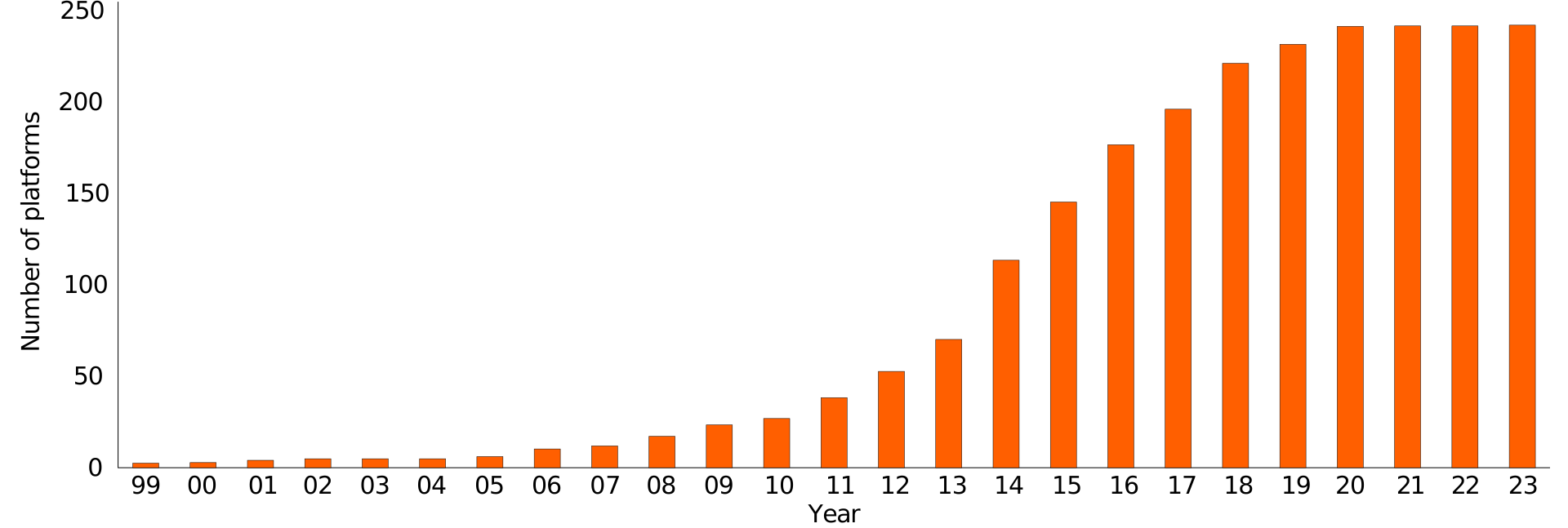
Source: International Labour Organization (2024). Decent Work and the Care Economy
The $1.1 trillion opportunity.
Workforce shortages are not simply a healthcare issue. They are an economic issue.
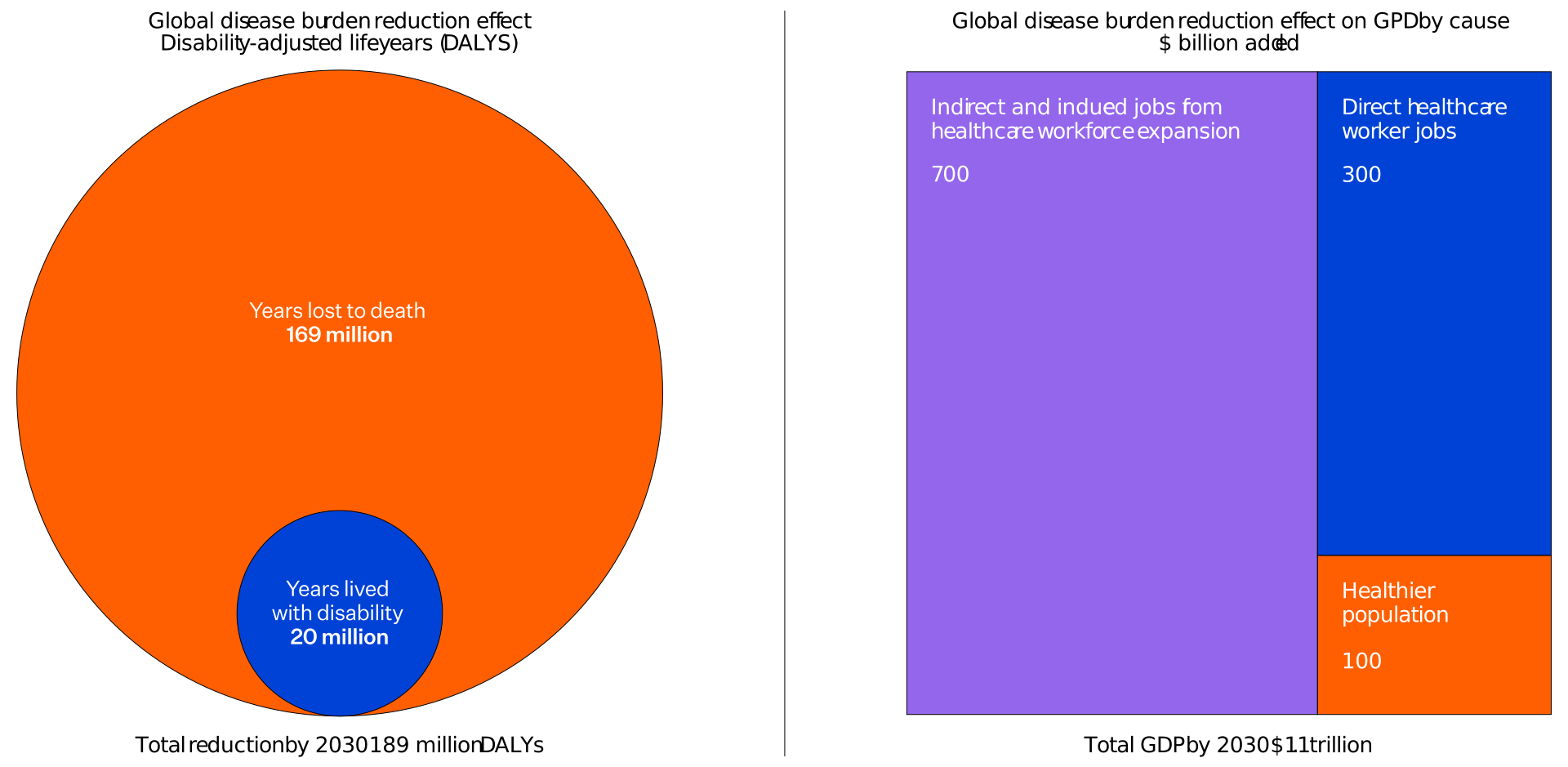
Source: International Labour Organization (2024). Decent Work and the Care Economy
McKinsey estimates that closing the global workforce gap could generate $1.1 trillion in economic value. Only a fraction comes directly from healthcare jobs. Most of the benefit comes from healthier populations, increased productivity, and broader economic growth.
Healthcare leaders, therefore, need to treat clinical time as a scarce strategic asset. That means investing in workforce supply, improving retention, redesigning care delivery, and ensuring technology reduces burden rather than adding to it.
The health systems that thrive will be those that maximise the value of human clinical expertise. In an era of rising demand, ageing populations, and constrained budgets, that may be the most important resilience strategy available.
Want to explore how connected digital health solutions can help reduce clinician burden and improve workforce productivity? Get in touch with the team to see how Orion Health helps health systems optimise capacity through connected, data-driven care.
Authored by Tom Varghese, Global Product Marketing & Growth Manager at Orion Health.
References:
- Beech, J., Bottery, S., Charlesworth, A., Evans, H., Gershlick, B., Hemmings, N., Imison, C., Kahtan, P., McKenna, H., Murray, R., & Palmer, B. (2019). Closing the gap: Key areas for action on the health and care workforce. The Health Foundation, The King’s Fund, & Nuffield Trust
- Boniol, M., Kunjumen, T., Nair, T. S., Siyam, A., Campbell, J., & Diallo, K. (2022). The global health workforce stock and distribution in 2020 and 2030: A threat to equity and ‘universal’ health coverage? BMJ Global Health, 7(6), e009316.
- GBD 2019 Human Resources for Health Collaborators. (2022). Measuring the availability of human resources for health and its relationship to universal health coverage for 204 countries and territories from 1990 to 2019: A systematic analysis for the Global Burden of Disease Study 2019. The Lancet, 399(10341), 2129–2154.
- International Labour Organization. (2024). Decent work and the care economy: International Labour Conference, 112th Session, Report VI. International Labour Office.
- Kumar, P., Holt, T., Wong, Y., & Kimeu, M. (2025). Heartbeat of health: Reimagining the healthcare workforce of the future. McKinsey Health Institute.
- Olson, K. D., Meeker, D., Troup, M., Barker, T. D., Nguyen, V. H., Manders, J. B., Stults, C. D., Jones, V. G., Shah, S. D., Shah, T., & Schwamm, L. H. (2025). Use of ambient AI scribes to reduce administrative burden and professional burnout. JAMA Network Open, 8(10), e2534976.
- Pathman, D. E., de Saxe Zerden, L., Konrad, T. R., Shafer, A. B., Harrison, J. N., Fannell, J., & Lombardi, B. M. (2025). Job assessments and the anticipated retention of behavioral health clinicians working in U.S. Health Professional Shortage Areas. BMC Health Services Research, 25, 592.
- World Health Organization. (2025). Health workforce.
- Zivin, K. (2025). Addressing clinician burnout and turnover: A call for systemic action. Medical Care, 63(4), 270–272.