


 US
US CA
CA GB
GB AU
AUThe pace of AI innovation in healthcare is accelerating. New models promise to read images, summarise notes, predict risk, and personalise care. Some of this will be transformative.
But there’s a catch: AI models are only one part of the system. The real constraint is whether healthcare organisations can access, trust, and use the data on which those models depend. Put simply, healthcare isn’t limited by AI. It’s limited by data, and data depends on interoperability.
The data problem behind healthcare AI
AI needs more than just volume; it needs quality, diversity, and context.
That includes:
- Clinical data, diagnostics, and medications
- Social and behavioural context
- Patient-generated data
- Longitudinal health journeys
The challenge? Most of this data is fragmented across systems, inconsistently coded, and often locked within organisational boundaries.
Even when digitised, it’s not always usable in real time. That’s why recent research consistently points to the same conclusion: AI in healthcare requires an interoperable data ecosystem to succeed.
Why fragmented data limits AI impact
A model trained on incomplete data can still look impressive, but it delivers narrow insights.
Without full patient context:
- Clinical decision support can miss critical signals.
- AI recommendations lose credibility.
- Outcomes become harder to trust.
Electronic health records (EHRs) improved digitisation, but they didn’t solve connectivity. In many cases, they reinforced silos instead of enabling connected care.
That’s why interoperability isn’t just technical plumbing. It’s strategic infrastructure.
How interoperability enables scalable AI
Interoperability determines whether data can move across systems, and whether it retains meaning when it does.
The evolution of interoperability
Understanding how we got here highlights why gaps still exist.
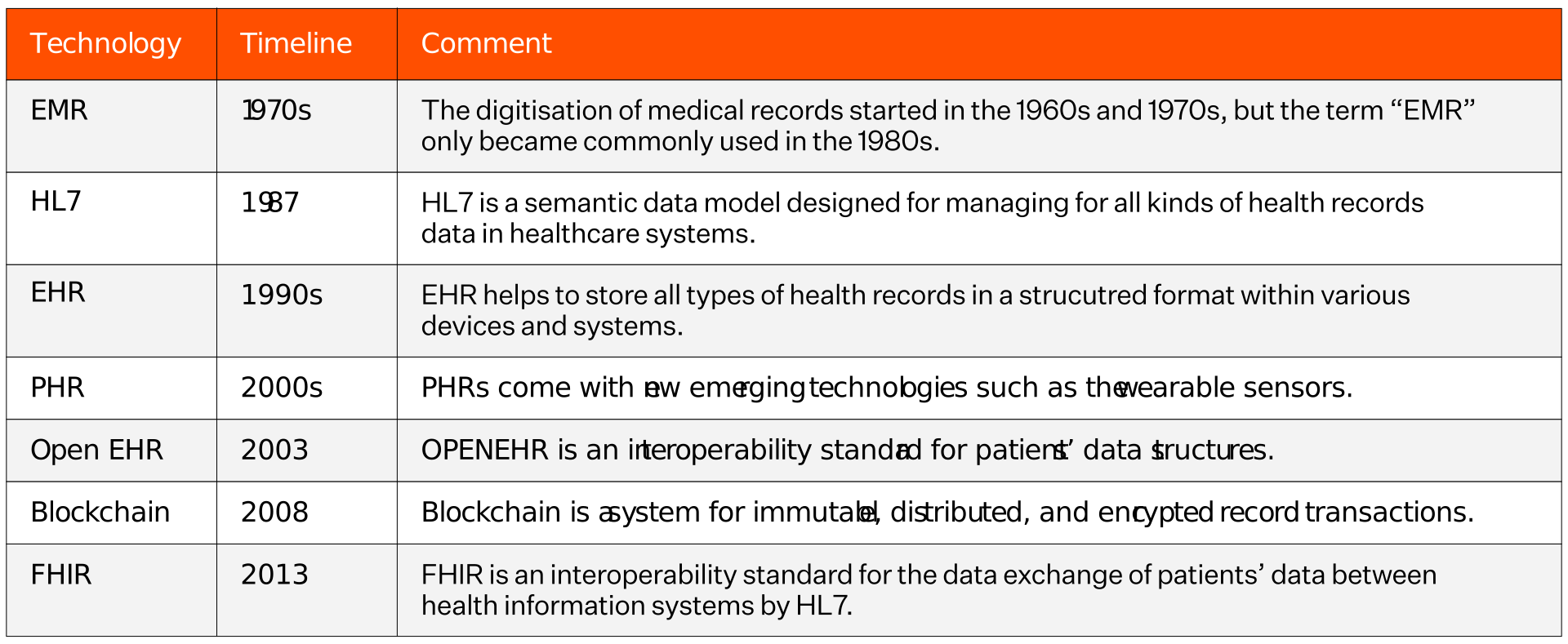
Source: Saberi et al. (2025)
From early EMRs in the 1970s to modern standards like FHIR, progress has been steady. But as the graph shows, adoption hasn’t kept pace with the complexity of modern care environments, leaving critical gaps in scalable data exchange.
The layers that matter
Effective interoperability operates across multiple levels:
- Technical – systems can connect.
- Syntactic – data is structured consistently.
- Semantic – meaning is preserved.
- Organisational and legal – data is shared safely and appropriately.
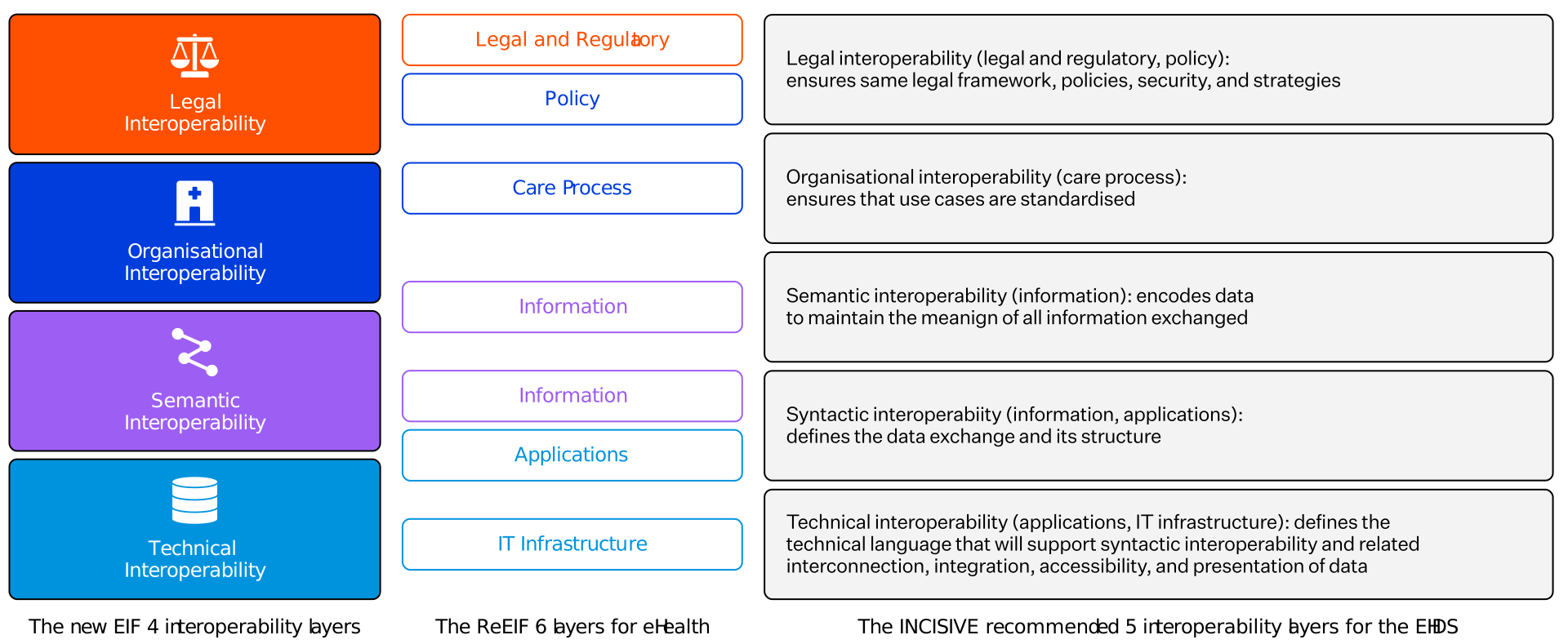
Source: Hussein et al. (2025)
Without alignment across these layers, data may move, but it won’t be usable.
Why interoperability is now a strategic priority
Healthcare leaders are already shifting their focus.
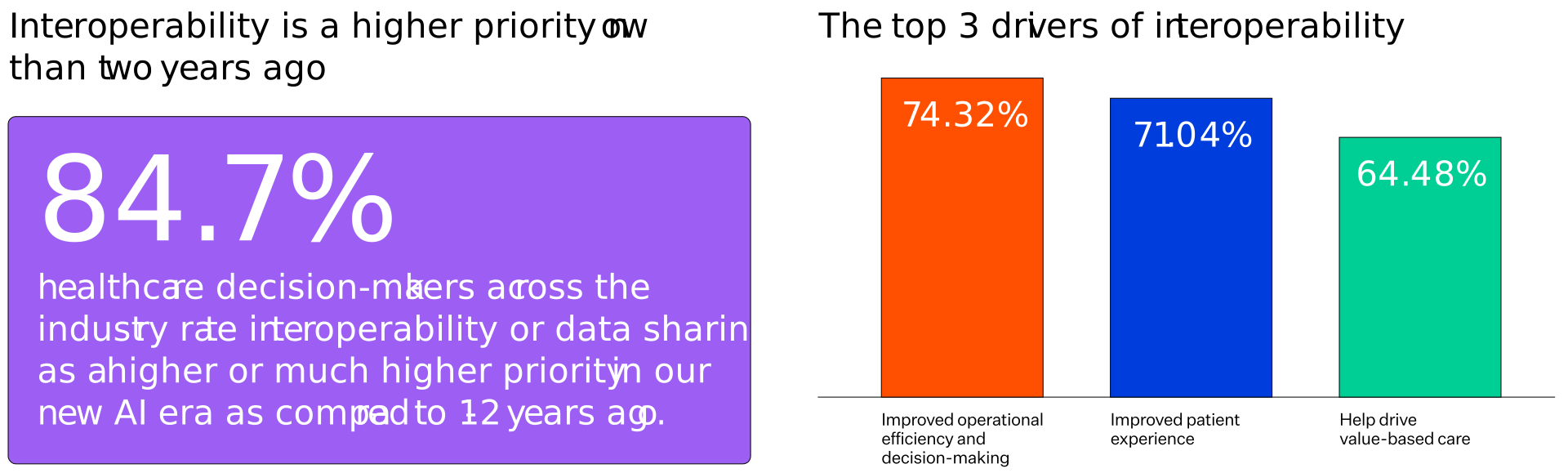
Source: Snowflake & Hakkoda (2026)
- 84.7% of decision-makers say interoperability is a higher priority than two years ago
- Key drivers include:
- Improved operational efficiency
- Better patient experience
- Enabling value-based care
This isn’t about compliance anymore. Interoperability is becoming a core operational and commercial capability.
Rethinking AI investment in healthcare
Many organisations start with the wrong question:
“Which AI model should we buy?”
The better question is:
“Do we have the data foundation to make AI safe, effective, and scalable?”
That means:
- Ensuring data is accessible across care settings
- Standardising how data is captured and shared
- Embedding governance that builds trust
Because healthcare isn’t just a data problem, it’s a trust, safety, and equity problem.
- Patients need confidence that their data is used appropriately.
- Clinicians need confidence in AI recommendations.
- Regulators need assurance that models can be governed.
Without this, AI won’t scale.
From fragmented data to connected intelligence
The future of healthcare AI won’t be defined by the most advanced models. It will be defined by enterprise discipline.
The organisations that succeed will:
- Build strong, interoperable data foundations.
- Apply consistent standards and governance.
- Connect data across the full patient journey.
This is how healthcare moves from:
- Fragmented records to connected intelligence
- Passive data to an active decision-making asset
Closing the interoperability gap
Healthcare doesn’t have an AI shortage. It has an interoperability gap.
Until that gap is closed, even the most powerful AI models will remain constrained by the data beneath them.
The opportunity now is clear: build the foundations that allow AI to deliver real, measurable impact, safely and at scale.
Ready to Build a Stronger Data Foundation?
Interoperability isn’t just a technical upgrade; it’s the foundation for better outcomes, smarter systems, and scalable AI.
Explore how Orion Health enables connected, interoperable healthcare ecosystems.
Authored by Tom Varghese, Global Product Marketing & Growth Manager at Orion Health.
References
- Adegoke, K., Adegoke, A., Dawodu, D., Adekoya, A., Bayowa, A., Kayode, T., & Singh, M. (2025). Interoperability as a catalyst for digital health and therapeutics: A scoping review of emerging technologies and standards (2015–2025). International Journal of Environmental Research and Public Health, 22, 1535.
- Hussein, R., Gyrard, A., Abedian, S., Gribbon, P., & Martínez, S. A. (2025). Interoperability framework of the European Health Data Space for the secondary use of data: Interactive European Interoperability Framework based standards compliance toolkit for AI driven projects. Journal of Medical Internet Research, 27, e69813.
- Mandl, K. D., Gottlieb, D., & Mandel, J. C. (2024). Integration of AI in healthcare requires an interoperable digital data ecosystem. Nature Medicine, 30, 631–634.
- Saberi, M. A., Mcheick, H., & Adda, M. (2025). From data silos to health records without borders: A systematic survey on patient centred data interoperability. Information, 16, 106.
- Singh, M., Siek, K., Danks, D., Ghani, R., Griffin, H., LaMacchia, B., Lopresti, D., & Toscos, T. (2024). Enabling the AI revolution in healthcare. Computing Research Association.
- Snowflake & Hakkoda. (2026). The future of AI + interoperability in healthcare report: The role of interoperability in scaling AI in healthcare. Snowflake.
- Zahlan, A., Ranjan, R. P., & Hayes, D. (2023). Artificial intelligence innovation in healthcare: Literature review, exploratory analysis, and future research. Technology in Society, 74, 102321.