


 US
US CA
CA AU
AU NZ
NZMost health systems say they want to keep people well. Strategies regularly reference prevention, population health, equity and sustainability. But budgets tell a different story.
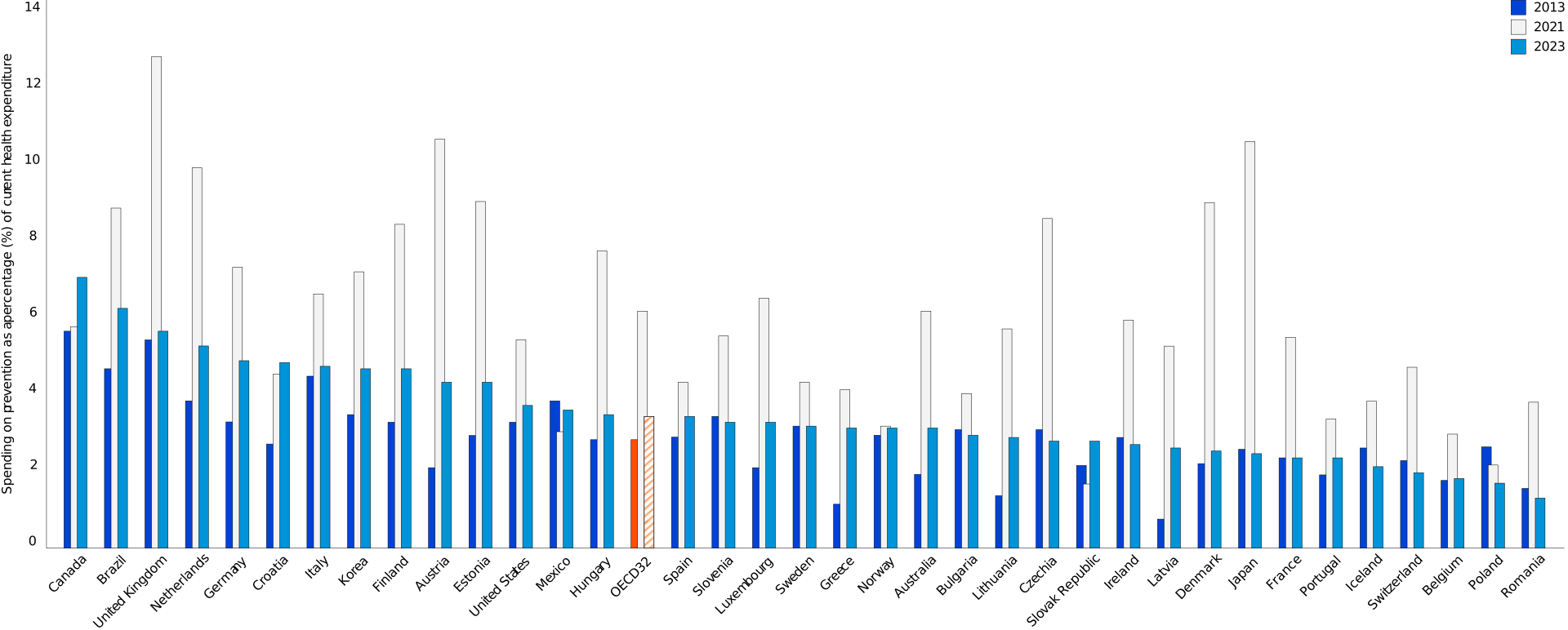
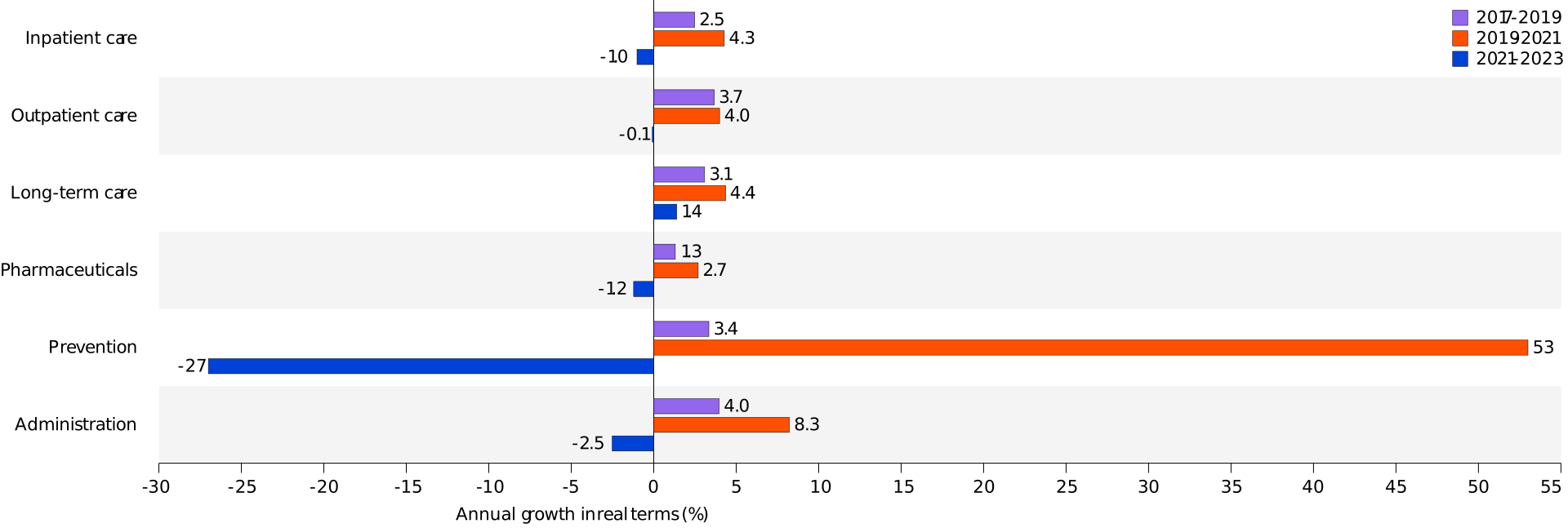
According to the OECD, prevention spending increased during the pandemic before falling back to around 3% of total health expenditure in 2023. When the threat was immediate and unavoidable, systems found room for prevention. Once the pressure eased, funding returned to reactive care.
That exposes a deeper truth about healthcare economics. Most systems are designed to respond to visible demand, not reduce future demand. It is an expensive bias.
The evidence against it is hard to ignore. A systematic review published in the Journal of Epidemiology and Community Health found a median return on investment of 14.3 to 1 for public health interventions. Prevention is not simply a moral argument. It is one of the strongest financial levers available to health systems.
Before exploring why this matters, it is worth looking at how little prevention still receives relative to overall healthcare spending.
Source: OECD – Health at a Glance 2025
Healthcare cannot afford to stay reactive.
The current model is becoming harder to sustain. Health systems are managing rising chronic disease, ageing populations, workforce shortages and escalating fiscal pressure simultaneously.
People are living longer, but many are spending more years in poor health. That affects far more than hospitals. Poor health reduces workforce participation, increases informal caregiving and drives avoidable demand across primary care, social services and emergency departments. The costs appear across the economy, even if the causes begin upstream.
That fragmentation is one reason prevention struggles for investment. The organisation funding the intervention is often not the organisation capturing the benefit.
A hospital may not fully benefit from avoided admissions. A payer may not retain members long enough to realise long-term gains. Governments often work within election cycles shorter than prevention payback periods. So treatment remains easier to justify because its demand is immediate, measurable and politically visible.
Meanwhile, prevention continues to generate value that is poorly attributed and inconsistently funded.
Source: OECD – Health at a Glance 2025
Prevention needs better commercial thinking.
If prevention can return 14 to 1, then health systems should evaluate it with the same discipline applied to infrastructure, workforce and digital transformation investments.
That means stronger business cases, clearer outcome measures, and more explicit links to avoided costs, productivity, and capacity release. Prevention cannot remain a side conversation delegated to public health teams while the rest of the system focuses almost entirely on managing illness.
It also requires recognising that prevention is not one category.
Some prevention is clinical, including immunisation, screening and chronic disease management. Some is behavioural, requiring long-term engagement around smoking, alcohol, nutrition and physical activity. Some is structural, shaped by housing, education, employment and transport before a patient ever enters a clinic.
Health systems cannot solve all of those factors alone. But they can lead differently. They can identify risk earlier through better data, partner across sectors, align incentives around outcomes, and invest in digital infrastructure that supports proactive care rather than simply digitising reactive workflows.
Success also needs to be measured differently. Not only by activity delivered, but by demand avoided and healthy life gained.
Prevention is a sustainability strategy.
The prevention debate often becomes overly sentimental. It should become more commercial.
A system that spends 97% of its budget largely outside prevention should not be surprised when preventable disease continues to rise. A system that funds illness more reliably than health should not be surprised when hospitals remain overloaded.
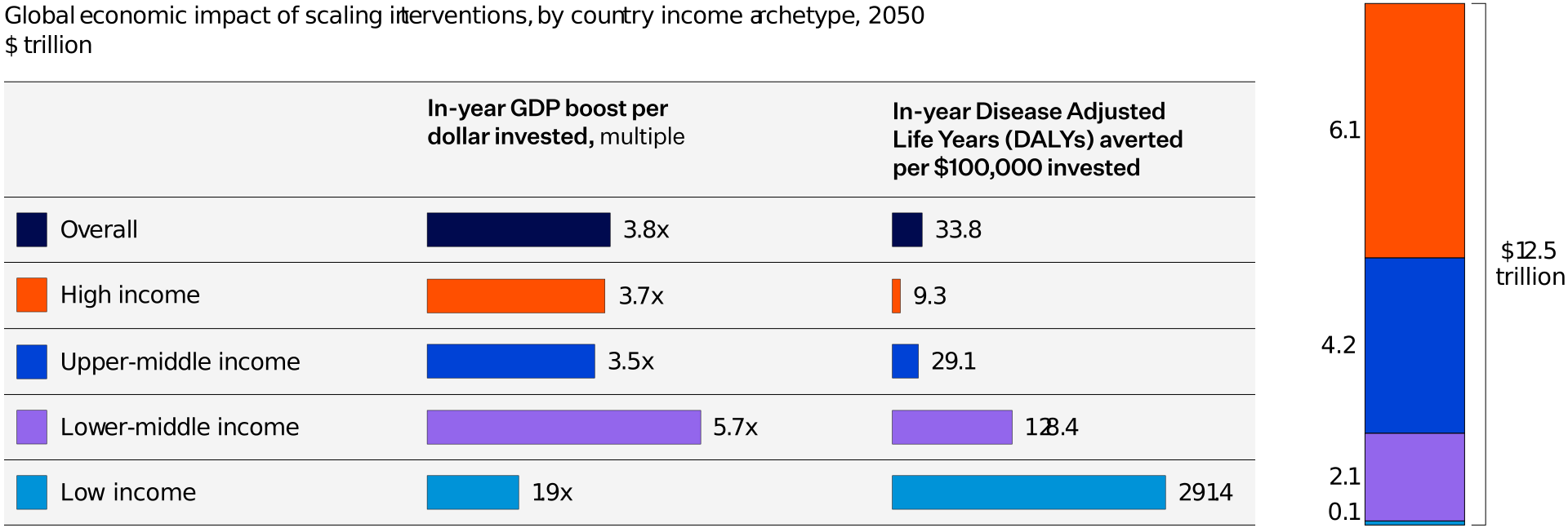
The economic opportunity is enormous.
Source: McKinsey Health Institute – The Health of Nations: Stronger Health, Stronger Economies
If health systems are serious about sustainability, prevention must move into the centre of strategy, capital allocation and executive accountability. The evidence already exists. The returns are measurable.
The real question is whether health systems are prepared to fund health with the same urgency they fund illness.
Authored by Tom Varghese, Global Product Marketing & Growth Manager at Orion Health.
References
- Beauvais, A., Herbig, B., Wilson, M., & Kumar, P. (2026, February 17). The health of nations: Stronger health, stronger economies. McKinsey Health Institute.
- Masters, R., Anwar, E., Collins, B., Cookson, R., & Capewell, S. (2017). Return on investment of public health interventions: A systematic review. Journal of Epidemiology and Community Health, 71(8), 827–834.
- Organisation for Economic Co-operation and Development. (2025). Health at a glance 2025: OECD indicators. OECD Publishing.