

 US
US CA
CA GB
GB AU
AU NZ
NZHealthcare often turns system failures into individual responsibilities. When clinicians feel exhausted, the conversation shifts to resilience. When teams are overwhelmed, the focus is on coping strategies. These explanations are not wrong, but they are too narrow. They put the burden on individuals and leave the way work is designed unchanged.
Why burnout is a system issue, not an individual one.
Burnout is an occupational phenomenon caused by chronic workplace stress, expressed through exhaustion and reduced professional efficacy. In healthcare, it reflects how work is structured, demand intensity, workflow design, tool usability, and the level of control clinicians have over their work.
The National Academies describes burnout as a systems issue that affects frontline care, organisational design, and the wider environment. When job demands are consistently higher than available resources, burnout is likely to occur.
How we frame burnout matters. If we see it as an individual issue, the response is limited to well-being programs. If we see it as a system design problem, the focus shifts to improving staffing, workflows, incentives, and technology.
How technology contributes to burnout.
Digital health highlights how system design can either support or strain clinicians.
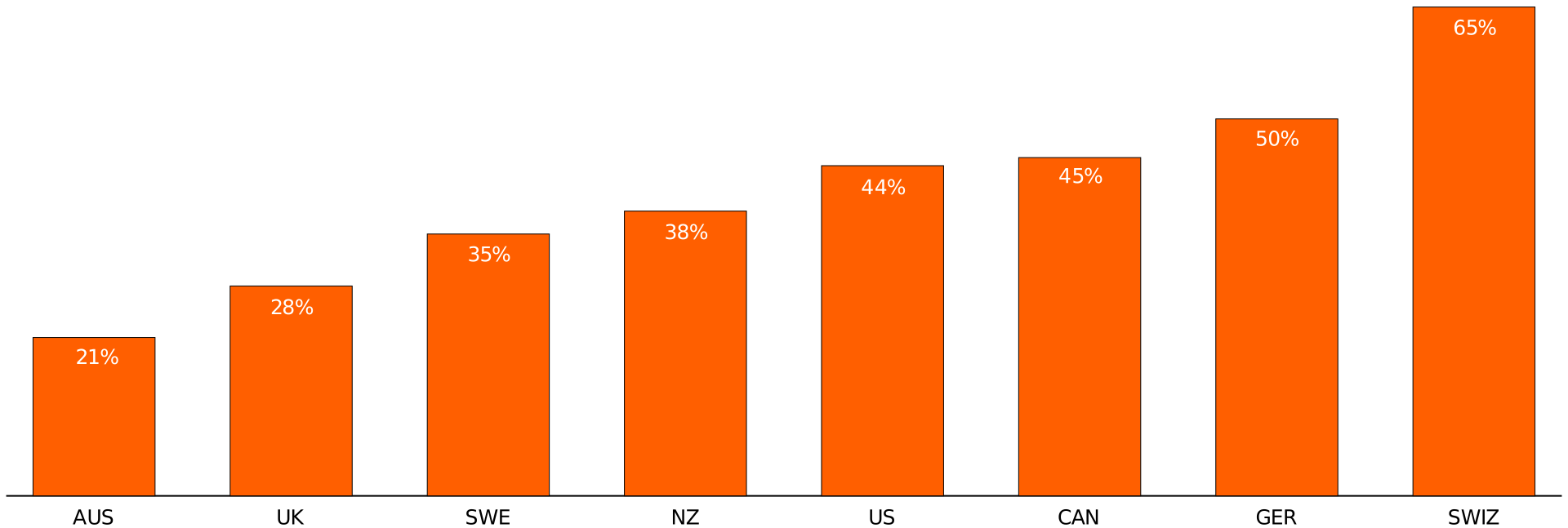
Source: Commonwealth Fund
The authors of a 2023 systematic review developed a model to summarise their findings. The model provides an explicit answer to the systematic review’s two objectives. First, based on consensus across the reviewed studies, the association between EHR use and clinicians’ stress and burnout was found to be positive (indicated by a continuous, one-directional arrow). Second, the review identified several contributing factors that mediated or moderated the impact of EHR use on clinicians’ stress and burnout.
As shown in this chart, clinician stress rises alongside increased EHR use, with reported burnout rates reaching up to 65% in some countries.
The biggest factors are how easy systems are to use and the time spent in them, especially in busy hospital settings.
Technology is not neutral. If it is not well integrated, it adds clicks, duplicates documentation, and extends work into after-hours. This changes clinical workflows and increases mental strain.
Workplace conditions drive burnout
The broader evidence reinforces that burnout is driven by workplace conditions, not individual resilience.
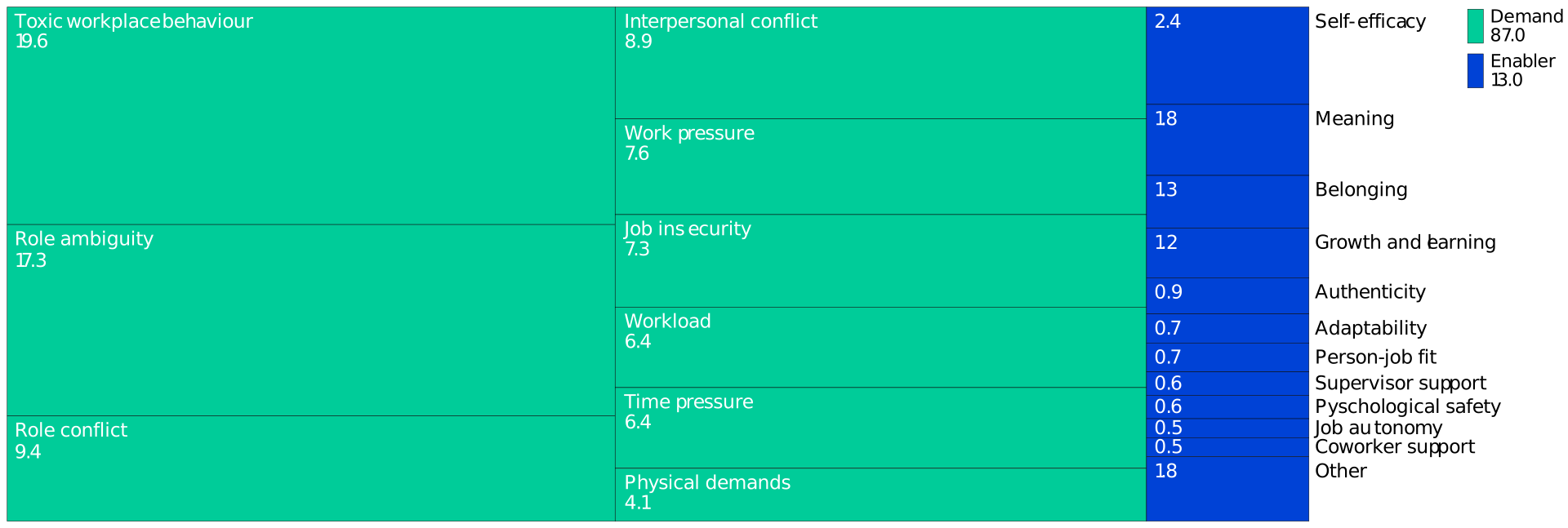
Source: McKinsey Health Institute
The visual shows that workplace demands, such as toxic behaviour, role ambiguity, and workload, are seven times more predictive of burnout than positive enablers.
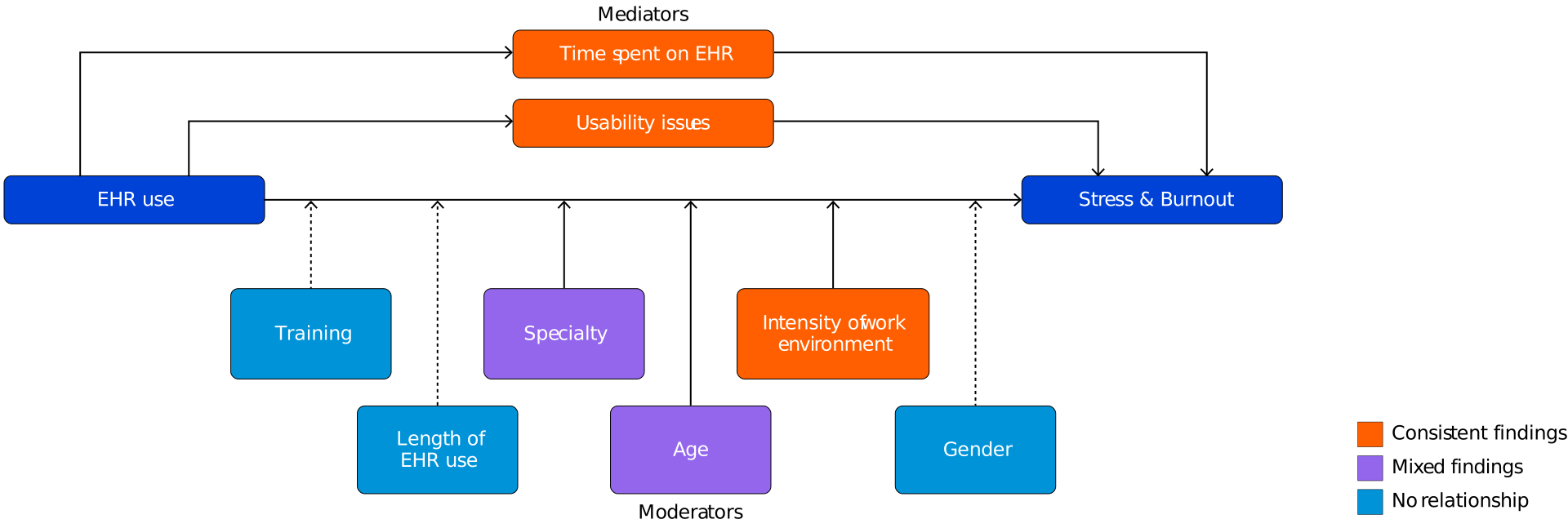
Source: Alobayli et al. (2023)
This graph highlights how administrative burden, particularly time spent in EHRs, is a leading contributor to burnout.
For many clinicians, administrative work is not just inefficient. It is the main source of stress.
Why well-being alone falls short
Burnout affects performance, quality, safety, staff retention, and costs. Still, many responses focus on individual support, such as counselling, coaching, and resilience training.
These interventions are helpful, but they are not enough. If a strategy ignores staffing, workflow problems, documentation burden, and poor system design, it only treats the symptoms, not the real causes.
Designing systems that reduce friction
Healthcare will always involve complexity and high-stakes decision-making. The goal is not to remove that complexity, but to eliminate avoidable friction.
This requires:
- Streamlined workflows that reduce duplication
- Technology that supports, rather than interrupts, clinical work
- Documentation aligned with patient value
- Greater clinician autonomy
- Leadership accountability for work conditions
Burnout is not unavoidable. It is a sign that the system is under too much strain.
The Future of Healthcare Leadership
Healthcare leaders now need to build systems that do not rely on overworked staff to keep things running.
Successful organisations will see clinician capacity as a key asset. They will create workplaces where technology fits in smoothly, administrative tasks are reduced, and clinicians can focus on patient care.
Burnout does not happen because people lack resilience. It happens when systems depend on resilience to make up for their flaws.
Authored by Tom Varghese, Global Product Marketing & Growth Manager at Orion Health.
References
- Amiri, S., Mahmood, N., Mustafa, H., Javaid, S. F., & Khan, M. A. (2024). Occupational risk factors for burnout syndrome among healthcare professionals: A global systematic review and meta analysis. International Journal of Environmental Research and Public Health, 21(12), 1583.
- lobayli, F., O’Connor, S., Holloway, A., & Cresswell, K. (2023). Electronic health record stress and burnout among clinicians in hospital settings: A systematic review. Digital Health, 9, 1 to 17.
- Nagarajan, R., Ramachandran, P., Dilipkumar, R., & Kaur, P. (2024). Global estimate of burnout among the public health workforce: A systematic review and meta analysis. Human Resources for Health, 22, 30.
- National Academies of Sciences, Engineering, and Medicine. (2019). Taking action against clinician burnout: A systems approach to professional well being. The National Academies Press.
- Shanafelt, T. D., West, C. P., Sinsky, C., Trockel, M., Tutty, M., Wang, H., Carlasare, L. E., & Dyrbye, L. N. (2025). Changes in burnout and satisfaction with work life integration in physicians and the general US working population between 2011 and 2023. Mayo Clinic Proceedings, 100(7), 1142 to 1158.