

 US
US CA
CA GB
GB AU
AU NZ
NZHealthcare AI is entering a two-speed era, and the dividing line is no longer access to technology. It is institutional readiness.
For years, the focus has been on models. Which perform best, which vendors lead, and which pilots to run. That framing is now outdated. Models are rapidly improving and becoming more accessible.
The real constraint has shifted. Today, the limiting factor is the system around the model.
The AI pressure clock. When deployment outpaces governance.
The AI pressure clock highlights a growing risk.
When organisations face high disruption but lack resilience, they enter a state of institutional vulnerability. In this zone, the issue is not the technology itself, but the surrounding governance, workflows, and accountability structures.
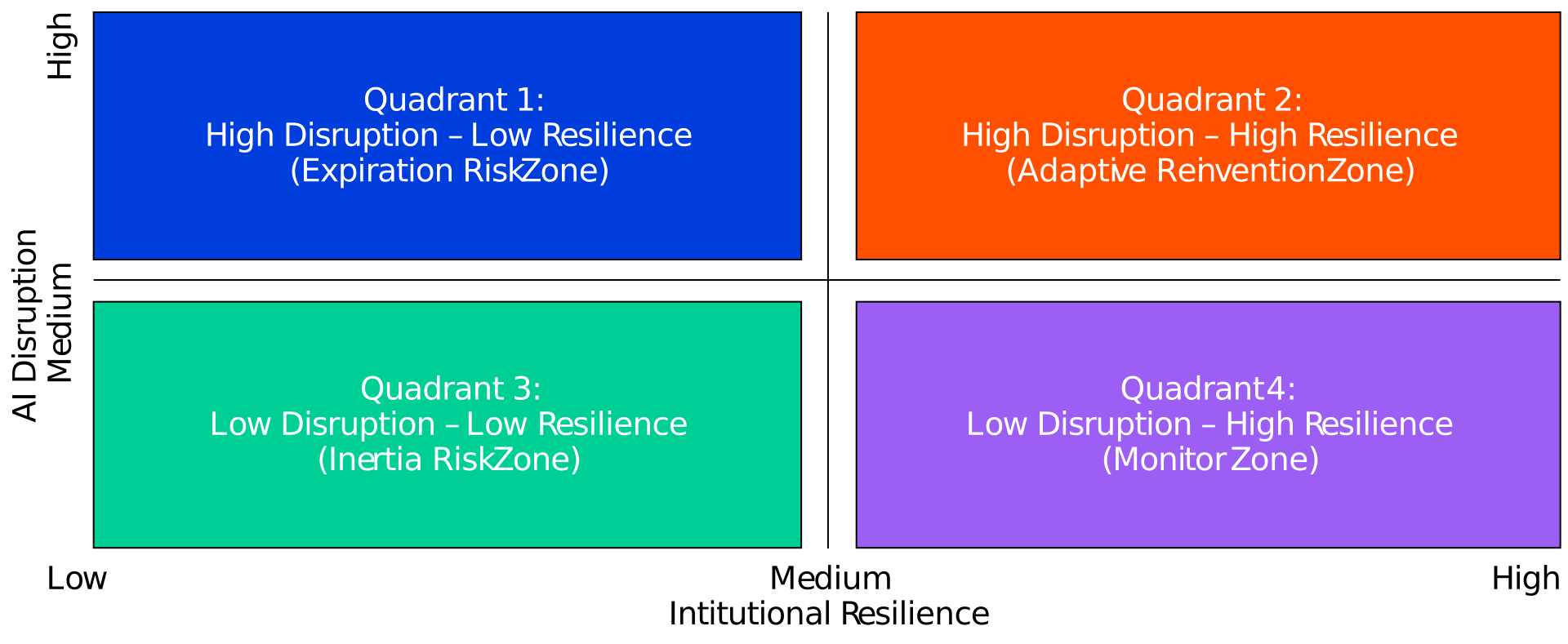
Source: Frimpong, V. (2025). When institutions cannot keep up with artificial intelligence
Evidence from US hospitals makes this gap clear.
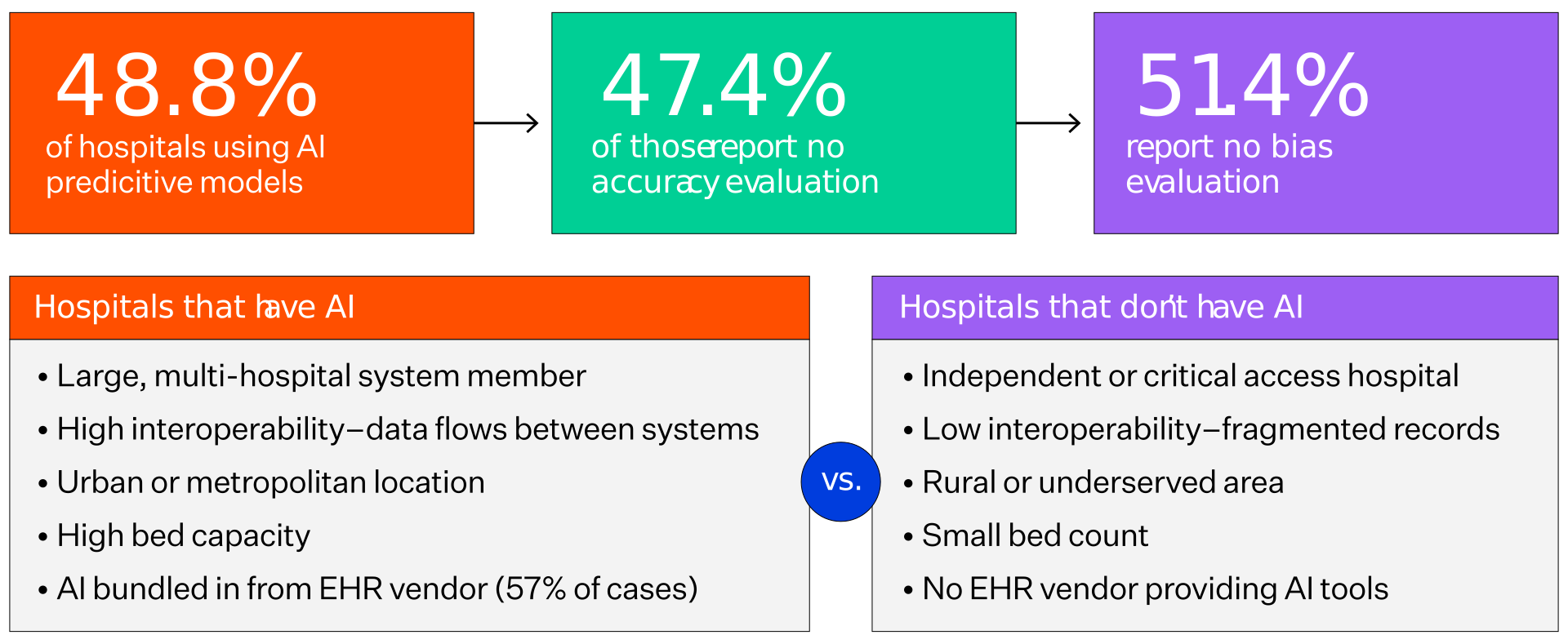
Source: Hwang, Y. M. et al. (2026). The landscape of AI implementation in US hospitals
Predictive AI is already widely adopted. However, many organisations still lack formal processes for accuracy evaluation and bias assessment. Deployment is outpacing governance and increasing risk beneath the surface.
What mature AI governance looks like.
The HAIRA maturity model offers a clear benchmark for AI readiness.
At higher maturity levels, organisations move beyond tool deployment. They:
- Run multi-centre validation studies,
- Embed predictive monitoring into routine care,
- Operate governance at an executive level with real-time oversight.
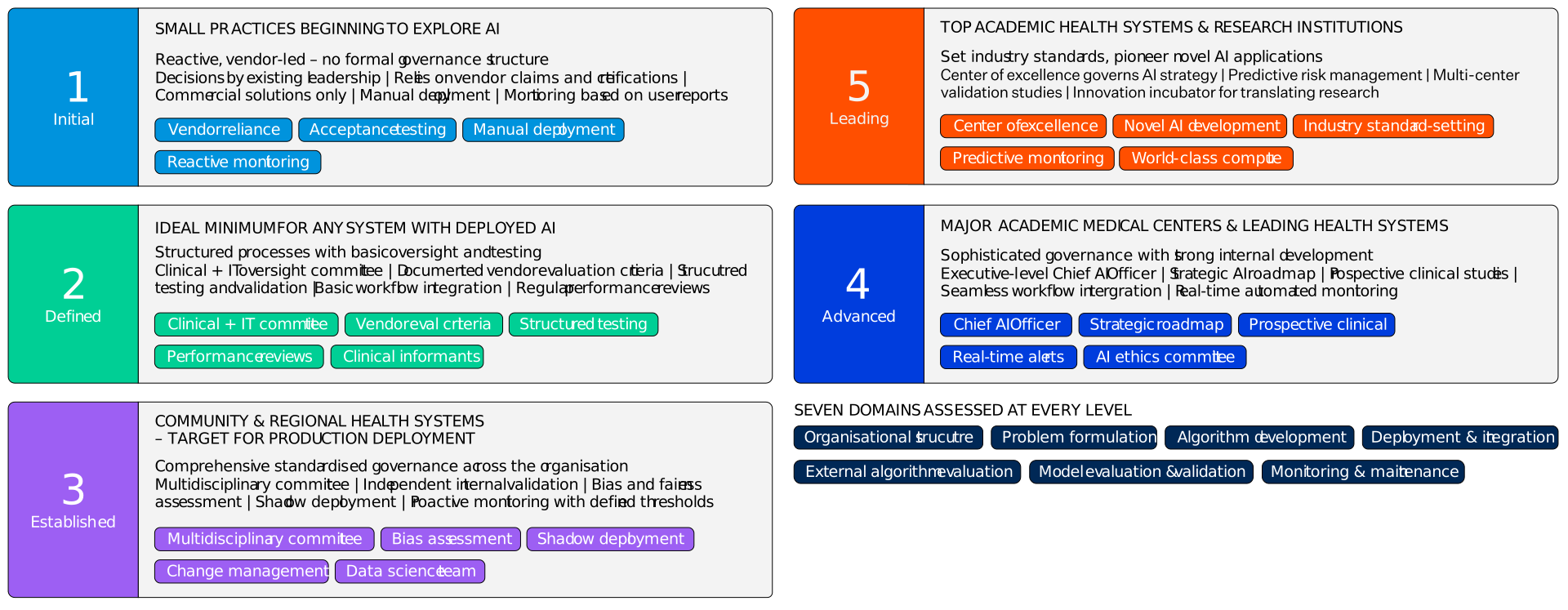
Source: Hwang, Y. M. et al. (2026). The landscape of AI implementation in US hospitals
Lower maturity environments remain reactive and vendor-led. Decisions lack structured evaluation, and monitoring is inconsistent.
This is not a gradual progression. It is a shift in operating model.
AI-decorated vs AI-native organisations.
The divide becomes clearer when comparing AI-decorated and AI-native organisations.
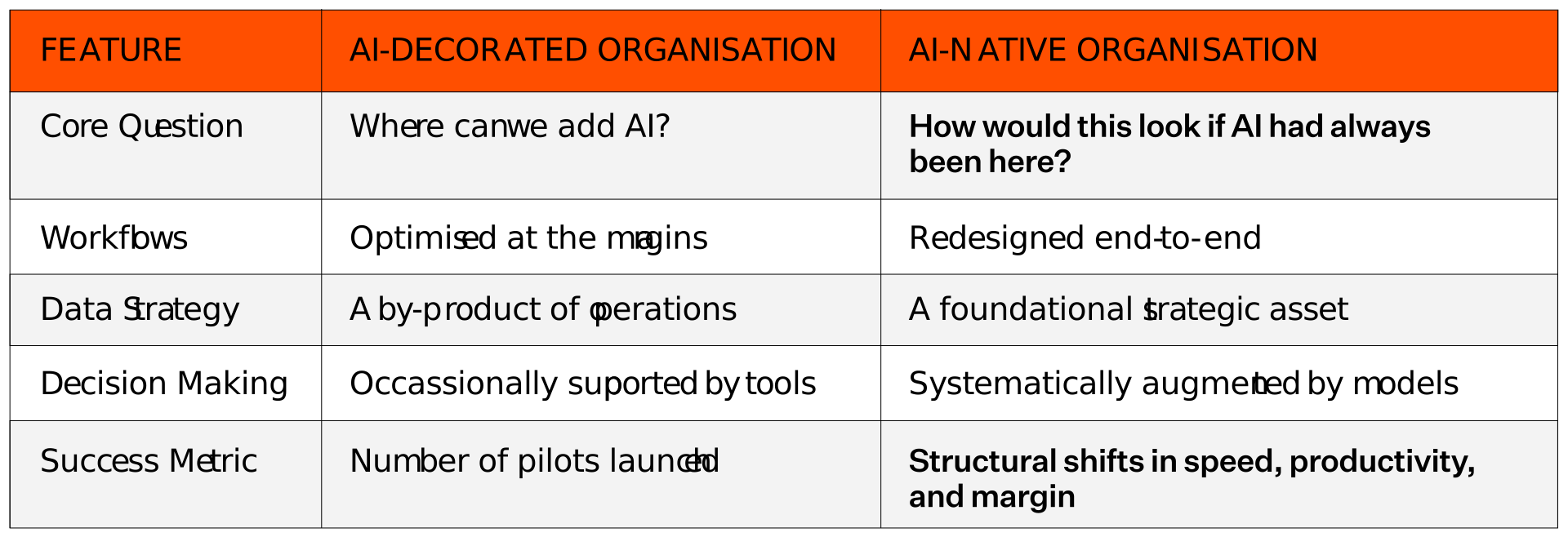
Source: Mathews, G. (2024)
AI-decorated organisations focus on pilots and isolated tools, measuring success through activity.
AI-native organisations redesign workflows end-to-end. They treat data as a strategic asset and embed AI into decision-making at scale.
The impact is measurable:
- AI-decorated organisations struggle to sustain value.
- AI-native organisations gain speed, productivity, and stronger resource allocation.
For leadership, this reframes investment. Funding models alone will not deliver results if the system cannot support them.
Where investment should shift.
Sustainable AI adoption depends on system-level investment.
Governance, interoperability, validation frameworks, and clinical integration must be treated as core capabilities. This is where resilience is built.
Leadership also plays a critical role. Moving beyond pilots requires:
- Executive ownership,
- Clear accountability,
- Discipline to stop initiatives that do not scale.
Without this, organisations accumulate disconnected capabilities that fail to deliver enterprise value.
At a board level, the focus must shift from counting AI initiatives to assessing readiness. This includes governance strength, evaluation standards, and risk visibility.
The emerging divide in healthcare AI.
The divide is already forming.
Organisations that build the right foundations will not just adopt AI. They will reshape how care is delivered. Those that do not will remain stuck in pilot cycles, with growing exposure.
The question is not whether to invest in AI.
It is whether your organisation is ready to support it at scale.
Build the foundations for scalable AI.
AI success starts with the system, not the model.
From interoperability to governance and real-time data integration, strong digital foundations enable safe, scalable AI.
Authored by Tom Varghese, Global Product Marketing & Growth Manager at Orion Health.
References
- Frimpong, V. (2025). When institutions cannot keep up with artificial intelligence: Expiration theory and the risk of institutional invalidation. Administrative Sciences, 15(7), 263.
- Hussein, R., Zink, A., Ramadan, B., Howard, F. M., Hightower, M., Shah, S., & Beaulieu Jones, B. K. (2026). Advancing healthcare AI governance through a comprehensive maturity model: A systematic review. npj Digital Medicine.
- Hwang, Y. M., Ng, M. Y., Pillai, M., et al. (2026). The landscape of artificial intelligence implementation in US hospitals. Nature Medicine, 32(11), 99–112.
- Kelly, C. J., Karthikesalingam, A., Suleyman, M., Corrado, G., & King, D. (2019). Key challenges for delivering clinical impact with artificial intelligence. BMC Medicine, 17(1), 195.
- Mathews, G. (2024). AI native divide.
- Rajkomar, A., Dean, J., & Kohane, I. (2019). Machine learning in medicine. New England Journal of Medicine, 380(14), 1347–1358.
- Topol, E. (2019). Deep medicine: How artificial intelligence can make healthcare human again. Basic Books.