


 US
US CA
CA AU
AU NZ
NZ
Population health management (PHM) is a proactive, people-focused approach that uses data to improve the health and well-being of specific groups. It takes into account differences in risk, needs, and social factors within communities and adjusts services accordingly.
Rather than applying a one-size-fits-all model, PHM enables primary care to deliver targeted, equitable interventions. It shifts the system from passive, reactive treatment to proactive and anticipatory care.
On the ground, this means identifying those at highest risk, supporting self-management for people with chronic conditions, and ensuring complex patients receive coordinated case management. When done well, PHM strengthens both equity and system sustainability.
How the Kaiser pyramid illustrates risk-based care
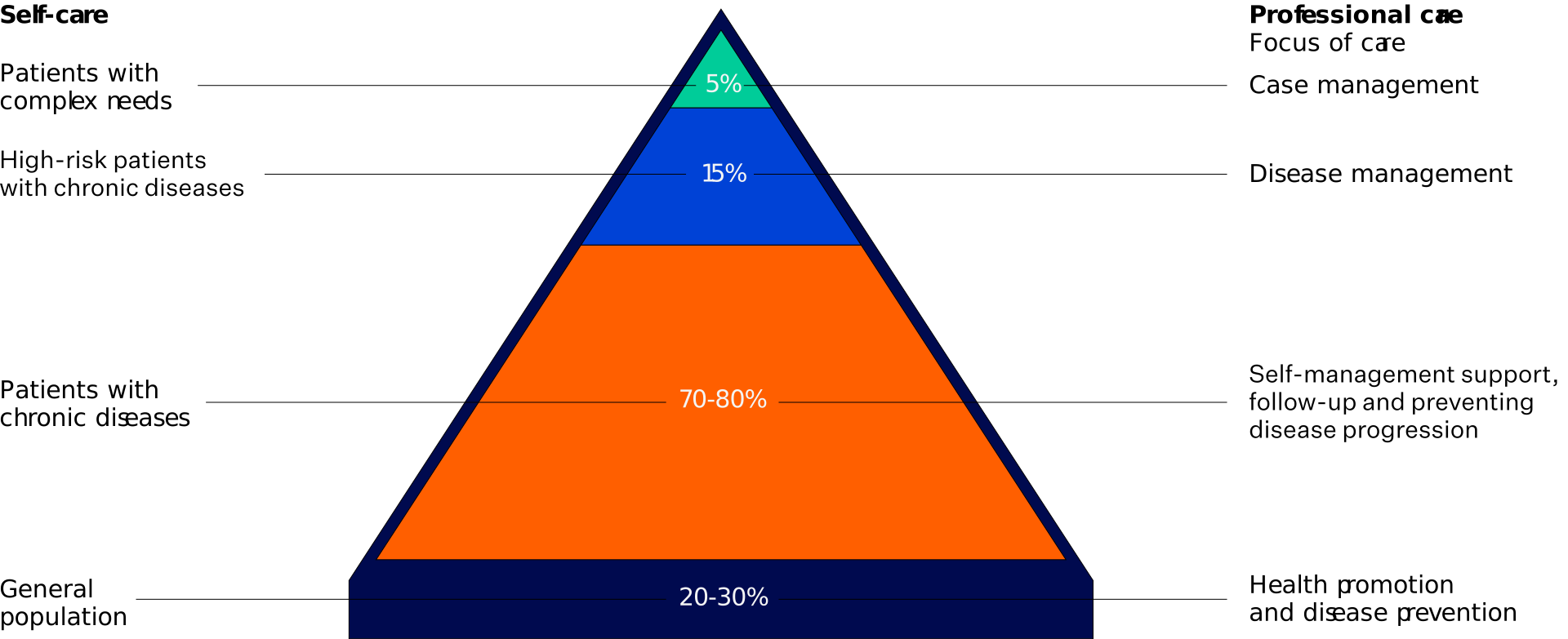
A practical way to visualise PHM in action is through the Kaiser Pyramid. It shows how services can be balanced based on patient risk and complexity.
Source: World Health Organization Regional Office for Europe (2023) – Population Health Management in Primary Health Care
The pyramid shows:
- A small proportion of patients with complex needs require intensive case management.
- A larger proportion benefits from disease management and structured professional support.
- The majority are supported through health promotion, prevention and self-care.
Balancing self-care and professional care helps keep the system sustainable. When risk stratification and segmentation are applied effectively, resources are directed to those who need them most, reducing inefficient utilisation and avoidable emergency department visits.
Why continuity of care improves outcomes
Continuity of care is more than just a preference. It is closely linked to better health outcomes.
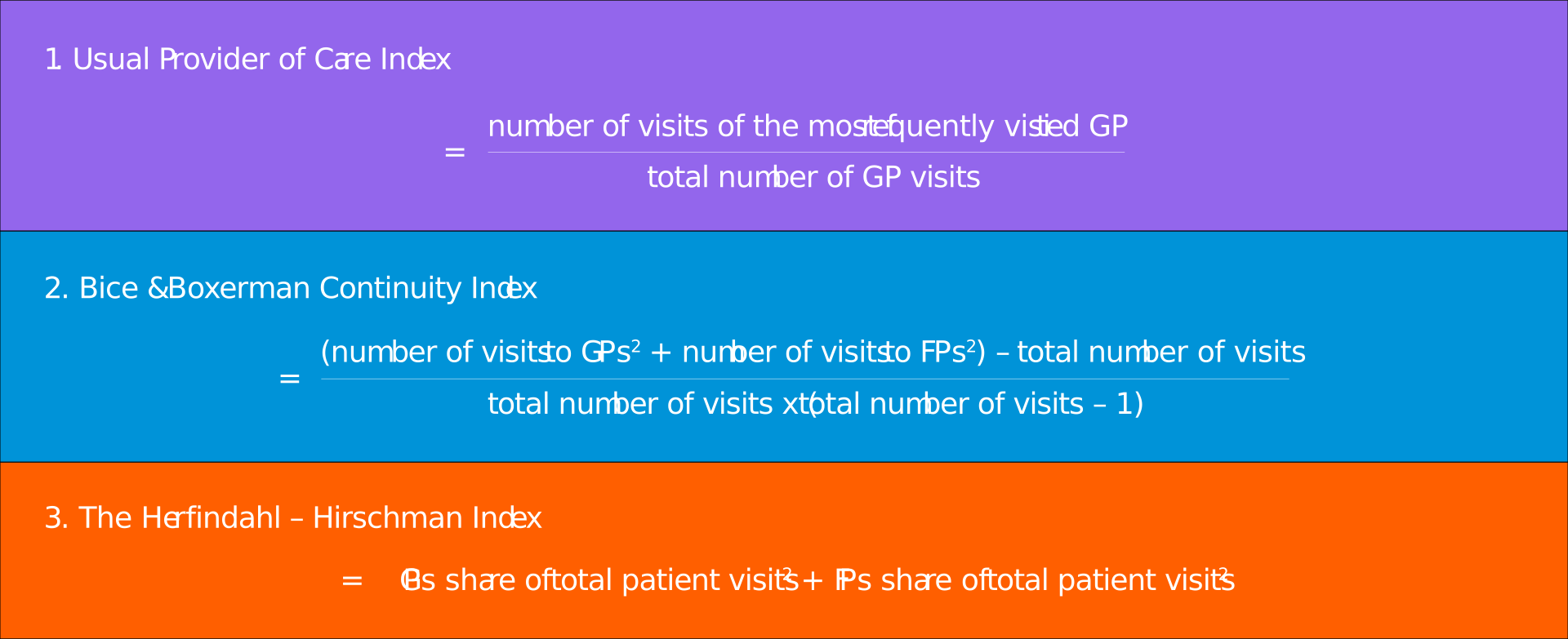
A systematic review of quantitative studies covering more than 15 million patients found that higher personal continuity between patients and general practitioner (GP) probably:
- Reduces premature mortality by 10–15%
- Lowers hospital admissions by 10–15%
- Reduces emergency department visits by 10–20%
These findings are supported by moderate certainty of evidence (Engström et al., 2025). Even small gains in personal continuity can significantly reduce healthcare use and improve access.
Source: Engström SG et al. (2025) British Journal of General Practice
In general practice, continuity means patients feel their care matches their needs each time they visit. It is widely regarded as a key component of high-quality primary care.
Continuity builds trust and helps doctors get to know patients better, so care can be adjusted over time. But in today’s group practices, continuity does not always happen automatically.
Studies from Sweden and other global health systems show that simply registering with a GP does not always lead to better continuity of care at subsequent visits (Janlöv, Blume, & Glenngård, 2023). Systems need to support real relationships, not just assign names.
Primary care networks and the limits of structure without support
In the UK, Primary Care Networks (PCNs) were introduced to better integrate health and social care and to make primary care more sustainable. Early progress included governance arrangements and expanded multidisciplinary roles, such as pharmacy and social prescribing.
However, evaluations indicate:
- Limited management funding
- Heavy reliance on clinical directors
- Restricted backfill support
Without adequate infrastructure, expectations exceed capacity. For PCNs to thrive within integrated care systems, additional expertise in population health analysis and organisational development is required.
Changing structures is not enough. PCNs also need enough resources, skills, and the right incentives.
The NHS neighbourhood health vision and place-based integration
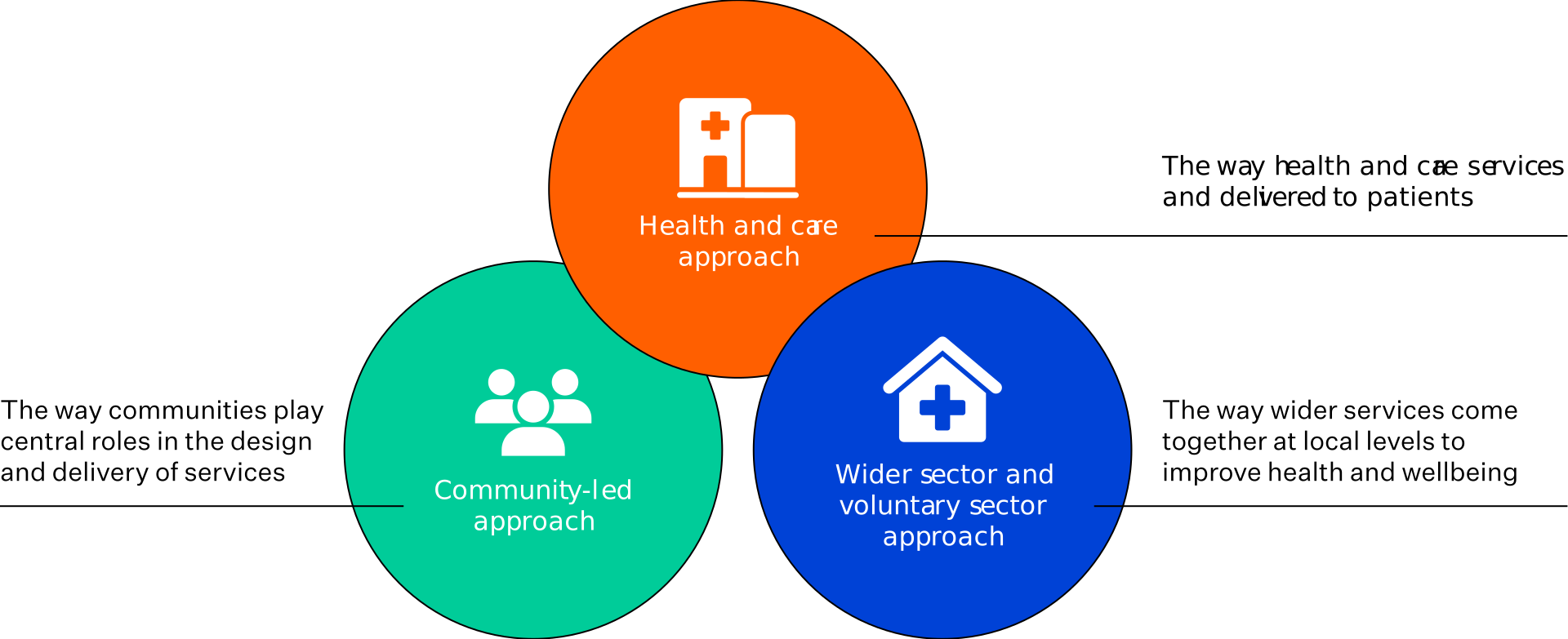
The NHS neighbourhood health service vision highlights the value of local, integrated care models.
Source: The King’s Fund – What is neighbourhood health?
Neighbourhood health brings together preventive and personalised care delivered closer to home. It is shaped by community voices and organised to improve outcomes while reducing inequalities.
This approach aligns directly with PHM principles:
- Defined local populations
- Proactive risk identification
- Integrated services across health and social care
- A focus on prevention and equity
When neighbourhood-level integration is combined with data-driven population insight, systems can move from fragmented service delivery to coordinated, anticipatory care.
Aligning financial incentives with total population health
Structural change requires financial alignment. It has been argued that meaningful population health improvement will not occur until incentives are explicitly designed to support it.
Today’s biomedical model mostly rewards treating illness, rather than prevention and equity. A new system should encourage overall population health, including:
- Prevention
- Social determinants of health
- Equity-focused resource allocation
Ambitious “Big Hairy Audacious Goals” (BHAGs) have been proposed to focus attention on life expectancy, social spending, and broader determinants of wellbeing. These system-level goals aim to encourage shared accountability across sectors.
Population health management can support this shift. Through risk stratification and segmentation, PHM enables more informed and equity-sensitive resource allocation. This ensures that those with the greatest need receive appropriate support, while reducing avoidable demand on acute services.
Building a sustainable health system through integration
Health systems are unlikely to become sustainable through one-off actions.
It requires a coherent formula that integrates:
- Personal responsibility, supported by health literacy and self-management
- Continuity of care, embedded in relational and organisational structures
- Proactive population health management, addressing risk and social determinants
- Funding models that reward improved outcomes rather than activity alone
The evidence suggests that continuity improves outcomes and that population-based planning strengthens equity and efficiency. However, these components depend on aligned incentives and adequate infrastructure.
A sustainable health system needs more than just personal responsibility or funding changes. It emerges from integrating all three: personal responsibility, funding, and system design, while focusing on equity, prevention, and shared responsibility.
Turning population insight into action
Population health management is not just a policy ambition. It requires the ability to define populations, stratify risk, integrate data across care settings, and translate insight into coordinated action at the neighbourhood level.
Orion Health’s population health solutions enable health systems to connect data, identify risk earlier, and support proactive, integrated models of care. Explore how Orion Health can support your population health strategy and neighbourhood-level integration.
Authored by Tom Varghese, Global Product Marketing & Growth Manager at Orion Health.
References
- Anell, Anders, et al. 2023. Sweden: Health System Review 2023. Copenhagen: WHO Regional Office for Europe.
- Barker, I., A. Steventon, and S. R. Deeny. 2017. “Association between Continuity of Care in General Practice and Hospital Admissions for Ambulatory Care Sensitive Conditions.” BMJ 356: j84.
- Ellegård, Lina Maria, Anders Anell, and Gustav Kjellsson. 2024. “Enabling Patient–Physician Continuity in Swedish Primary Care: The Importance of a Named GP.” BJGP Open.
- Engström, Sven Göran, Malin André, Eva Arvidsson, Carl Johan Östgren, Margareta Troein, and Lars Borgquist. 2025. “Personal GP Continuity Improves Healthcare Outcomes in Primary Care Populations: A Systematic Review.” British Journal of General Practice.
- Hughes-Cromwick, Paul, and Sanne J. Magnan. 2024. “BHAGs for Aligning Incentives and Building a Learning System to Improve Total Population Health.” American Journal of Managed Care 30 (Spec. No. 13): SP1013–SP1023.
- Janlöv, Nina, Sofia Blume, and Anna Glenngård. 2023. Sweden: Health System Review. Copenhagen: WHO Regional Office for Europe.
- Maddox, Raglan, et al. 2023. “Ethical Publishing in Indigenous Contexts.” Tobacco Control.
- Smith, Judith A., Katherine Checkland, Manbinder Sidhu, Jonathan Hammond, and Sarah Parkinson. 2021. “Primary Care Networks: Are They Fit for the Future?” British Journal of General Practice 71 (714): 106–107.
- Thomas, Samantha, Joel Francis, Marita Hennessy, Kate Frazer, Charlotte Godziewski, Caitlin Douglass, Orkan Okan, and Mike Daube. 2024. “The Year in Review—Health Promotion International 2023.” Health Promotion International 39.
- World Health Organization Regional Office for Europe. 2023. Population Health Management in Primary Health Care: A Proactive Approach to Improve Health and Well-Being. Copenhagen: WHO Regional Office for Europe.