

 US
US CA
CA GB
GB AU
AU NZ
NZHealthcare leaders often talk about the “last mile” as though it is infrastructure. A patient portal. A clinic. A digital front door. The final stage is where the strategy eventually reaches the patient.
But the last mile in healthcare is not a place. It is a person.
It is the nurse trying to navigate a new workflow while managing clinical risk in real time. It is the doctor deciding whether to trust an alert or the patient sitting in front of them. It is the allied health professional moving between fragmented systems while trying to preserve continuity, safety, and trust.
Clinicians are expected to absorb policy, procurement, governance, compliance, and technology decisions and somehow translate them into care that still feels safe, human, and efficient. They are where strategy either becomes reality or quietly collapses under operational pressure.
That is why asking the clinician last may be one of the most expensive habits in healthcare transformation.
Why top-down healthcare transformation struggles
Healthcare still designs change in a sequence that feels rational from the boardroom but fragile at the bedside. Leaders define the problem, approve the investment, procure the platform, configure workflows, develop training, and set the go-live date. Only then are clinicians expected to adopt what has already become politically, financially, and operationally difficult to change.
We often call this engagement. In reality, it is frequently a consultation after commitment.
Research into healthcare transformation consistently shows that programmes shaped through participation and meaningful contribution outperform purely top-down approaches. That does not mean healthcare should abandon governance, prioritisation, or executive discipline. Health systems still need leaders willing to make difficult decisions about investment, sequencing, and trade-offs.
But leadership is not the same thing as designing from altitude.
In complex healthcare environments, the people closest to the work are often the best interpreters of reality. They understand where friction accumulates, where safety risks hide, and where a seemingly elegant workflow will quickly become a workaround.
Clinician adoption determines whether digital health succeeds.
This becomes even more important with digital health and AI.
A tool may perform well in a study and still fail in practice if it does not fit clinical workflows, earn trust, or support professional judgement in the clinical moment. Research into clinician adoption of AI found that perceived usefulness was the strongest predictor of whether clinicians intended to use a system. But adoption was also shaped by workflow integration, trust, autonomy, and perceived risk.
In simpler terms, clinicians adopt technology when it helps them care for patients without making them feel less safe, less efficient, or less clinically responsible.
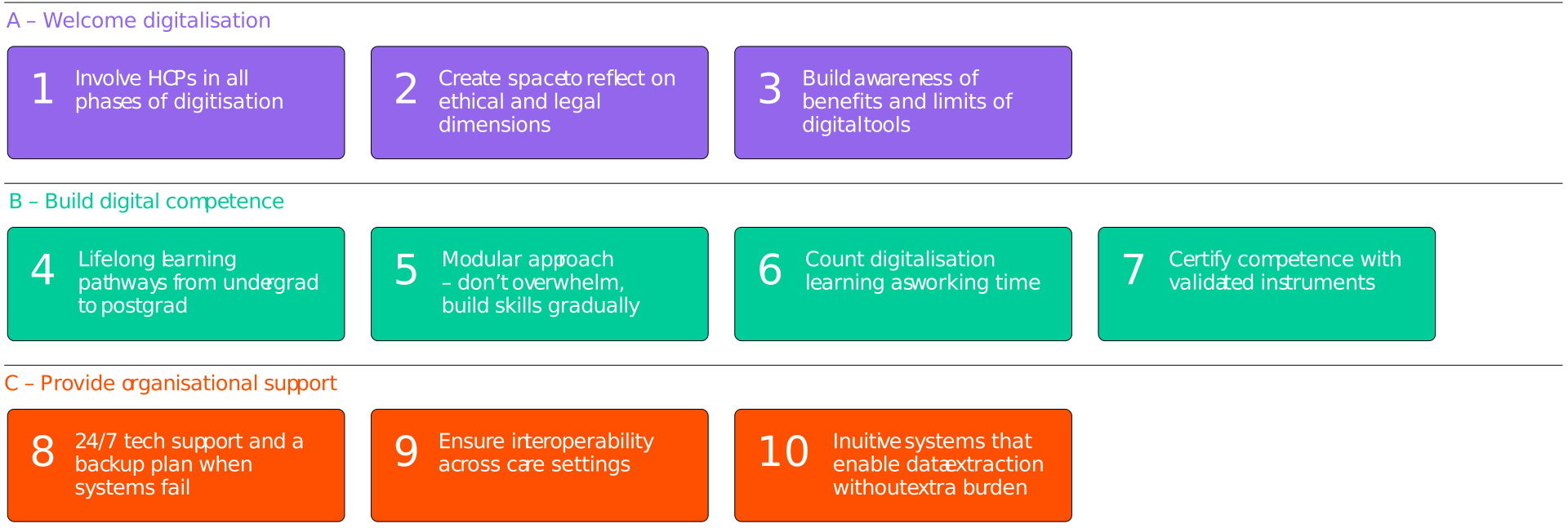
Before exploring implementation strategies, consider what clinicians identify as essential ingredients for successful digital transformation.
Source: Galazzi et al. (2025)
The recommendations emphasise involving healthcare professionals throughout digitisation, building digital capability over time, and ensuring systems are interoperable, intuitive, and supported by strong organisational backing.
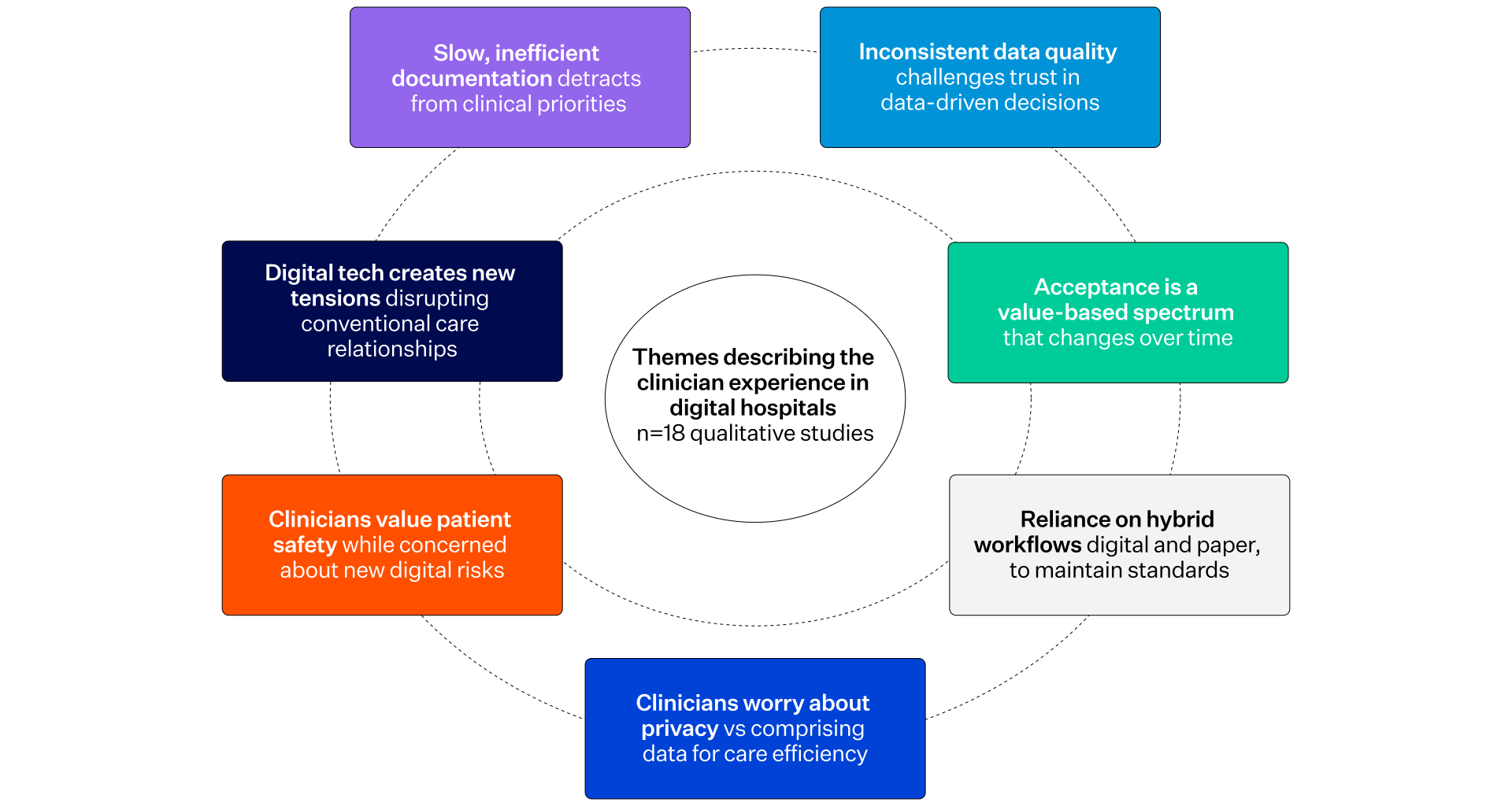
Beyond abstract recommendations, clinicians’ lived experience in digital hospitals reveals tensions that transformation dashboards rarely capture.
Source: Canfell et al. (2024)
The findings highlight recurring concerns around documentation burden, inconsistent data quality, hybrid workflows, privacy concerns, and disruptions to clinician-patient interaction.
This is where many transformation programmes become dangerous. Dashboards may show successful deployment milestones, completed training, and rising login numbers, while clinicians’ lived experience is that work has become slower, cognitive load has increased, and workarounds have quietly become the true operating model.
This disconnect illustrates why healthcare transformation is rarely just a technology shift and why complexity is often underestimated.
Source: Wosny, Strasser & Hastings (2024)
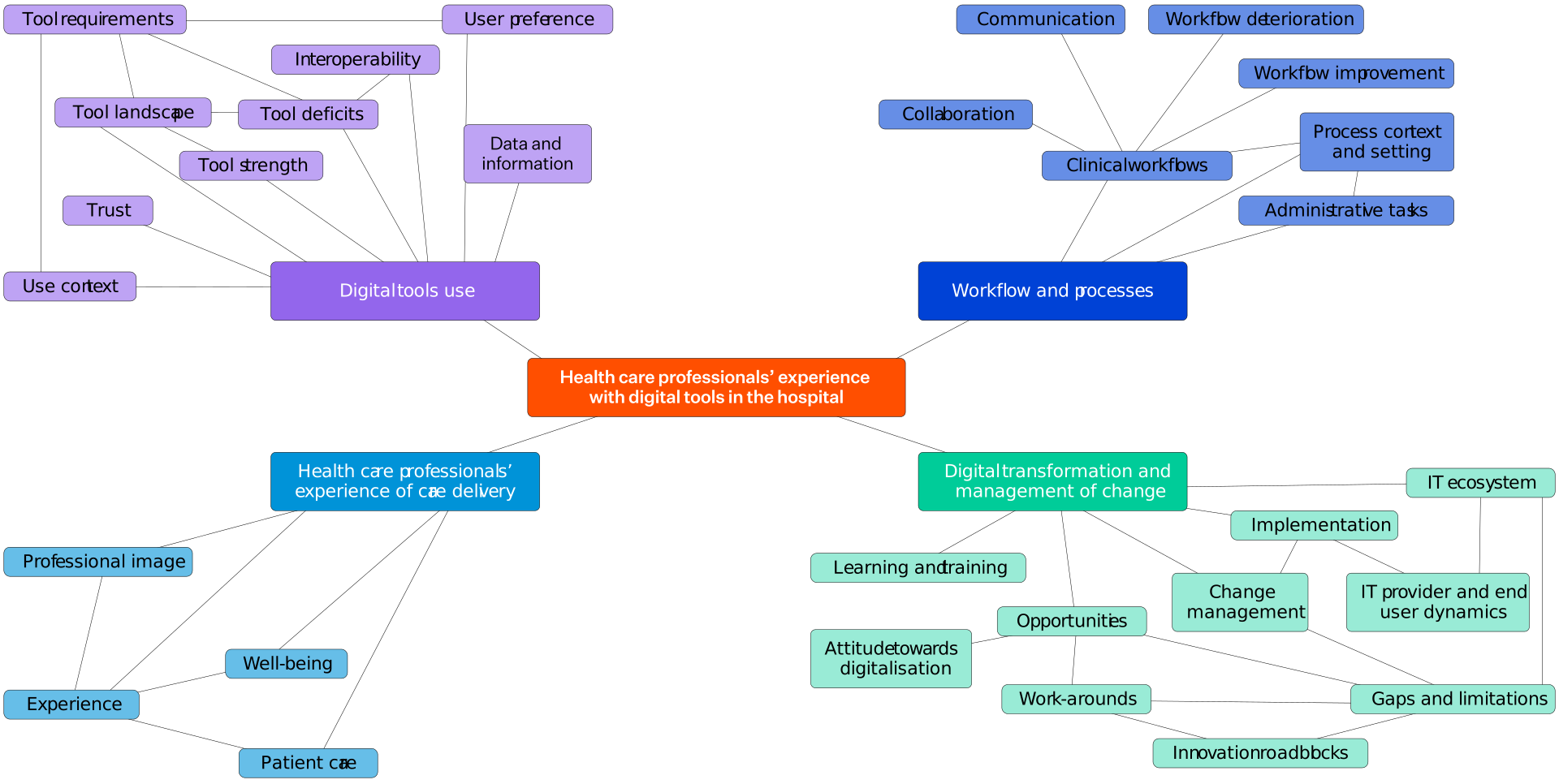
The thematic analysis shows how digital transformation simultaneously affects workflows, communication, wellbeing, patient care, trust, interoperability, and organisational change. It reinforces why clinician adoption cannot be treated as a simple training or compliance exercise.
Addressing that gap requires more than better technology; it demands stronger leadership.
Clinician scepticism is not resistance.
Healthcare organisations often interpret clinician scepticism as resistance to change. In reality, scepticism can be a strategic asset. The sceptical clinician is frequently the person who can identify where a workflow will fail, where patient safety may be compromised, or where the promised efficiency has simply shifted hidden labour onto frontline staff.
Sometimes clinicians are not resisting the future. They are protecting the future from poor implementation.
If healthcare organisations truly want transformation, clinician engagement needs to begin before procurement decisions are set in stone.
Real engagement means involving clinicians early enough that their input can still change the design. It means recognising clinical judgement as one of the strongest safeguards against waste, harm, and failed adoption.
The last mile in healthcare has always been human. It is a workload, a professional judgement, and a patient interaction.
Ask the clinician first, because transformation fails if the person expected to deliver it quietly decides it does not work.
Authored by Tom Varghese, Global Product Marketing & Growth Manager at Orion Health.
References
- Hastings, B. J. (2025). Guidance for successful healthcare transformation: A systematic review of change management practices and outcomes. Australian Journal of Management, 50(3), 985–1005.
- Mohamed, G. A. N., Ahmed, I. E., Mohamed, A., & Parambath, S. A. (2026). Factors influencing healthcare professional adoption of artificial intelligence: A mixed-methods systematic review and meta-analysis. InfoScience Trends, 3(11), 1–19.
- Canfell, O. J., Woods, L., Meshkat, Y., Krivit, J., Gunashanhar, B., Slade, C., Burton-Jones, A., & Sullivan, C. (2024). The impact of digital hospitals on patient and clinician experience: Systematic review and qualitative evidence synthesis. Journal of Medical Internet Research, 26, e47715.
- Harrison, R., Fischer, S., Walpola, R. L., Chauhan, A., Babalola, T., Mears, S., & Le-Dao, H. (2021). Where do models for change management, improvement and implementation meet? A systematic review of the applications of change management models in healthcare. Journal of Healthcare Leadership, 13, 85–108.
- Wosny, M., Strasser, L. M., & Hastings, J. (2023). Experience of health care professionals using digital tools in the hospital: Qualitative systematic review. JMIR Human Factors, 10, e50357.
- Borges do Nascimento, I. J., Abdulazeem, H., Vasanthan, L. T., Martinez, E. Z., Zucoloto, M. L., Østengaard, L., Azzopardi-Muscat, N., Zapata, T., & Novillo-Ortiz, D. (2023). Barriers and facilitators to utilizing digital health technologies by healthcare professionals. npj Digital Medicine, 6, 161.